Is there any truth to “kids ruin everything”? Barking Owl’s managing director tackles the common proverb by comparing it to her own lived experience of motherhood.
Motherhood in advertising has long been an unspoken challenge – a career-defining crossroads where ambition is too often questioned, and support systems fall short. And while the industry has made progress in acknowledging the realities of working parents, tangible change is still slow, leaving many mothers to navigate the journey alone.
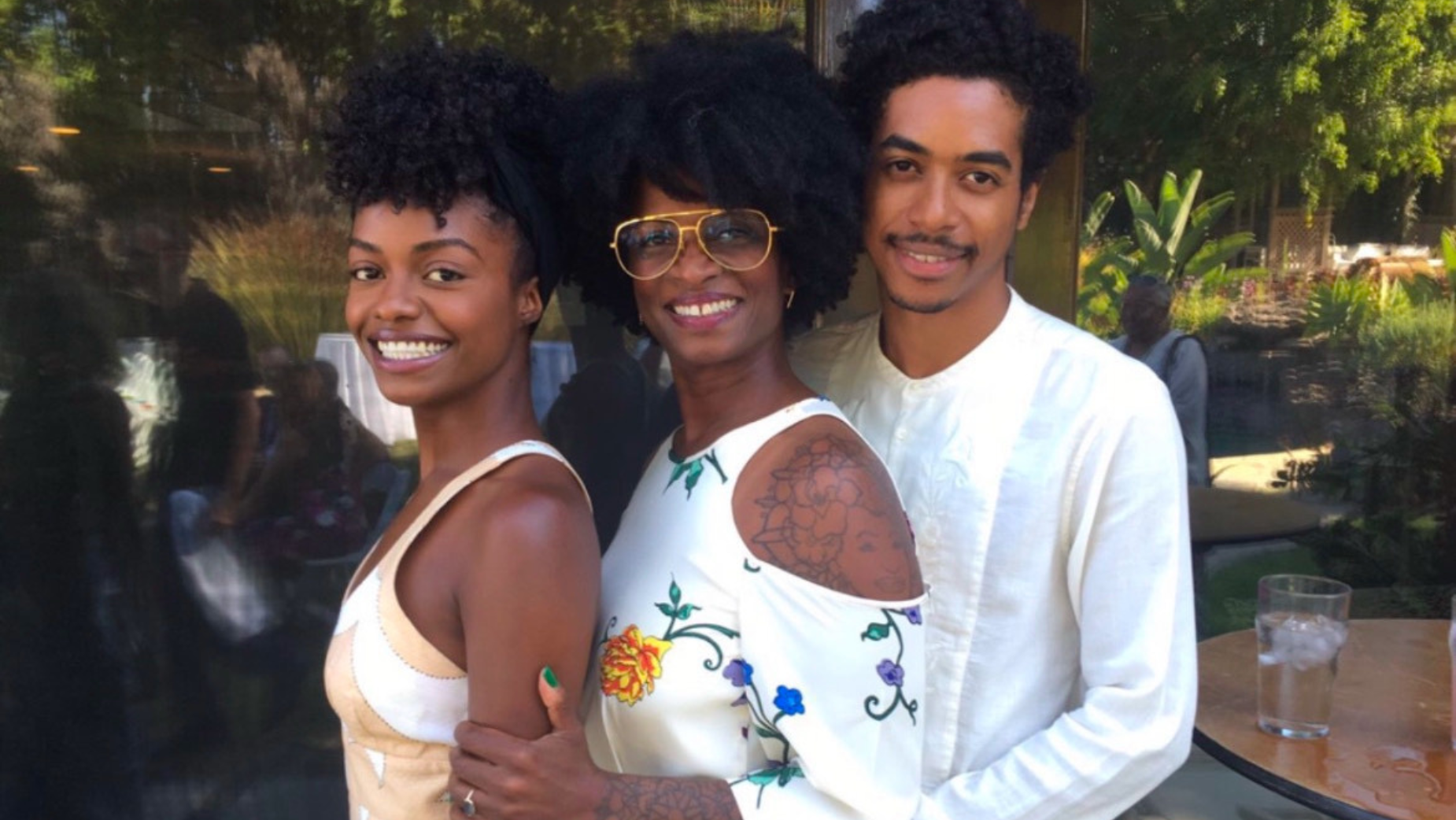
This edition of Motherland in Adland – the series founded by NERD’s Milana Karaica in partnership with LBB – sees Carol Dunn, managing director at Barking Owl, discuss the ins and outs of parenting as an ambitious woman in entertainment and advertising. From taking meetings with Wu Tang Clan, child in tow, to tag teaming parenting duties with a nanny and her mother-in-law, Carol looks back on what motherhood looked like for her over the course of her career in adland.
“Kids ruin everything!” I say it all the time, you can quote me… But that statement proves to be both true and false in the same breath, on different days, for different reasons. And here’s why…
I’ve worked in entertainment my entire career. Starting out as the switchboard operator at Capitol Records with a four year old at home and a sprog in my belly. When my kids were small, I had little to no guilt. As they grew older, they began to become vocal about their pride in watching me leave for the office, or even a business trip. The ‘adventure’ of doing their homework in my office was not an adventure at all but actually very normal.
I am lucky that I had a mother-in-law who tag teamed with a part-time nanny. This meant the kids had a home cooked meal every week day of their childhood — even if not a single one of those meals was cooked by me. Nor was I ever sitting at the family dinner table.
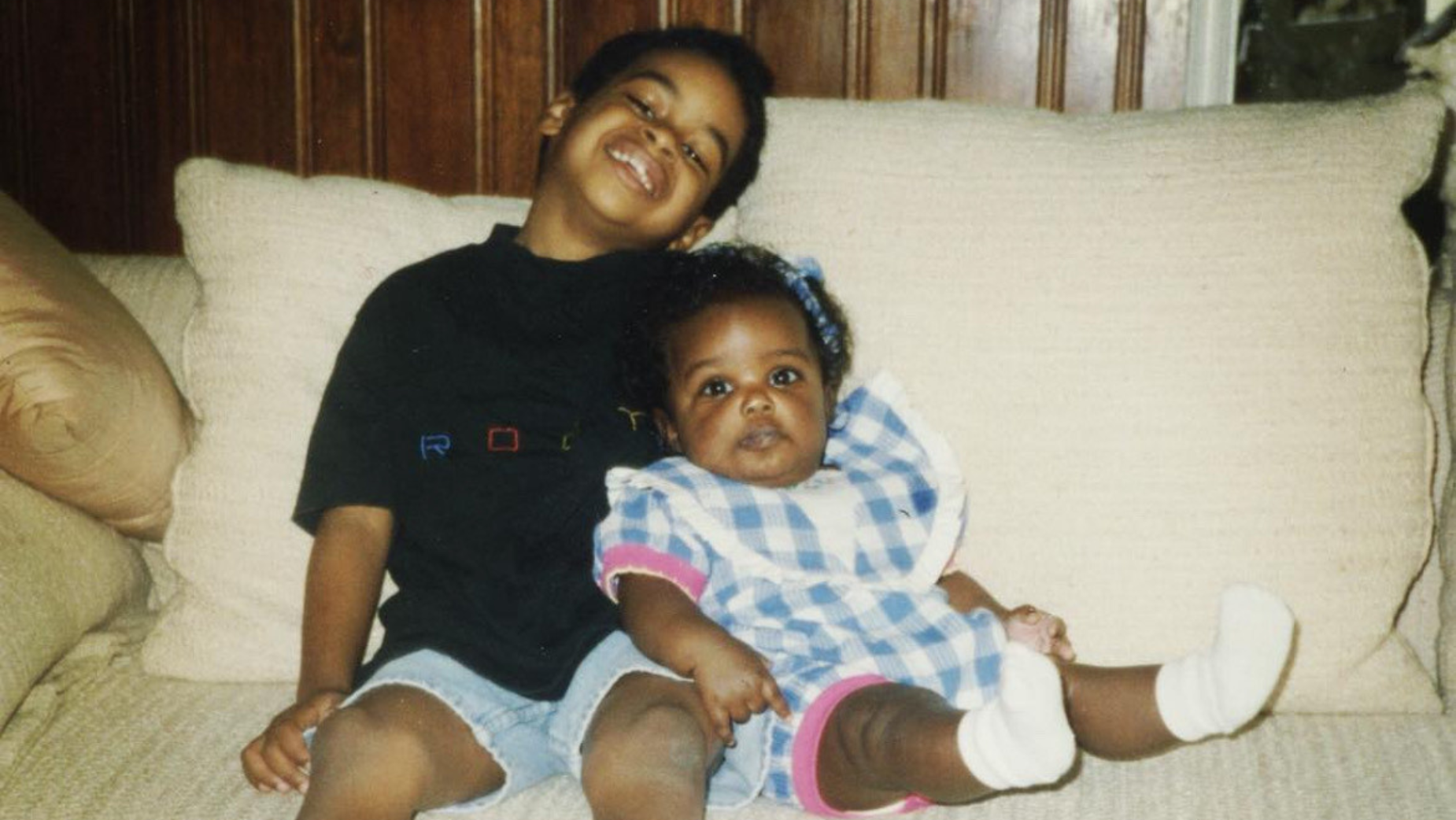
In spite of that, my kids, now 33 and 37, just this week told me they would both love to be “doing what [I] do”. Yes, I have tried to talk them out of it…
If I had any advice for new mothers it’s that it is normal to want to be at work and not at home sometimes. It is okay. I was back at work (due to terrible American maternity leave policies!*) three months after my second was born.
But, when all is said and done, I was thrilled to go back to work. I was lucky to be able to pump and provide breast milk to my daughter. Even she, at just nine months, was ready to spread her lactose wings and walk away from me – yup, she walked at nine months. Both of my kids did.
I was never afraid of my kids loving their grandmother or the nanny for that matter (which I find to be the oddest fear) more than me. I believe the thought and guilt a lot of mothers feel comes from outside chatter. External sources – family members, friends, IG ‘Trad Wife/Mom’ types – insisting that what they are doing is the right way to do it. But there isn’t a ‘right way’, there is just your way. No one can criticise you for doing it your way.
After all, where does most criticism blossom from? Jealousy and self doubt.
I am not going to say I had it all, nor that my work life balance was balanced. But while my career was my first choice my kids were my first loves. I truly have no guilt for the choices I made.
My daughter’s first trip to Manhattan was because I had meetings with Wu Tang. My son’s first dance floor experience with me was with Sia. The kids’ first concert was N’Sync at The Rose Bowl — we left after 4 songs, too loud!
Those experiences were available to us because of my access. My access was possible because of my work ethic. My work ethic was dogmatic because of my dedication to providing a full life for my children, with me.
*Shout out to Bulgaria and Sweden: Bulgaria offers 410 days (approximately 58.6 weeks) of paid maternity leave at 90% of the mother’s salary, starting 45 days before the due date; and Sweden provides 480 days of shared parental leave, with 390 days paid at 80% of wages.
This leave is designed to be shared between parents, with 90 days reserved specifically for fathers…
As part of the series ‘Motherland in Adland’, the head of operations and senior producer describes how working with fellow parents at creative studio, Ourselves, restored her confidence after facing redundancy.
Motherhood in advertising has long been an unspoken challenge – a career-defining crossroads where ambition is too often questioned, and support systems fall short. And while the industry has made progress in acknowledging the realities of working parents, tangible change is still slow, leaving many mothers to navigate the journey alone.
In this instalment of Motherland in Adland – the series founded by NERD’s Milana Karaica in partnership with LBB – we hear from Charlotte Jimenez, head of operations and senior producer at creative studio, Ourselves.
Charlotte’s story is one many mothers can relate to. Her ‘work hard, play hard’ approach to work was not sustainable in quite the same way after having children. Especially when toddlers just love to collect illnesses at nursery and require last-minute early pick ups. Juggling responsibilities in the home and the office left her edged out of her own career, and eventually, she was made redundant. Thankfully, her journey also comes with a happy ending, and hope for parents that like-minded, empathetic, adaptable workplaces are out there.
–
I’ve been working my dream job at Ourselves, a remote creative studio, for almost six years now. When Aaron and Steven, the founders, first called me, the timing couldn’t have been better. I was a new mum, still reeling from redundancy at the big agency where I’d spent most of my career, and in the middle of a real crisis of confidence. Their offer felt like I’d just been handed a golden ticket.
I’ve always been ambitious and full of energy. I love people, I love teamwork, and I come from the ‘work hard, play hard’ millennial era. (Thursday night drinks after work included.) But life looks a little different now. I’m a mum of two boys, and while I’m still passionate about my career in advertising, I want to do it in a way that works for my family too. That means working from home more than the office, being flexible and agile, making it to school events, taking the boys to their after-school clubs, and, most importantly, not being so stressed that I forget what (and who) really matters.
In the early years of project management, I worked my way up the ladder, got recognised for my hard work, had the chance to work abroad, and lead a team. Back then, the mums on my team were often labelled as ‘part-time’, despite being the first ones in the office and usually the last ones online – working longer and harder to make up for leaving early for school pick-ups.
Then I had a baby. What a shocker.
My firstborn was often unwell as a toddler, which meant the nursery would regularly call asking me to pick him up early. Those calls triggered frantic conversations with my husband as we both scrambled to negotiate with our bosses, promising to work late into the night to make up for leaving the office two hours early.
I constantly felt like I was letting my team down. Even when I was home with my son, I didn’t stop working. I managed projects from my phone, took calls while driving, and juggled spreadsheets with one hand while cuddling a poorly child with the other. Eventually, I was given smaller, less critical projects. I was left out of key conversations and pushed toward standalone jobs. Looking back, I realise this was my boss’s way of keeping me in a role without relying on me for anything crucial, so if I had to drop everything and run to nursery, I could. But I hated it. I felt sidelined, excluded, and my confidence took a huge hit. I wasn’t myself.
When covid hit and, subsequently, redundancies, there were no surprises. It was clear to me and to many of my friends who had started families that we were first in line. We had chosen motherhood, and in the eyes of leadership, that meant we couldn’t give the same blood, sweat, and tears as younger colleagues or those without children. That was it, confirmation that I was seen as the weakest link.
Birds of a Feather
Then came an unexpected lifeline. Aaron Howard, a creative director I’d worked with for over six years, called one afternoon while I was at home, juggling two young children and questioning my life choices. He and his co-founder, Steven Bennett-Day, were starting something new and needed a producer. Not only was I on Aaron’s list, I came highly recommended by peers and that was a huge lift for me.
As fathers themselves, Aaron and Steven had both left big ad-agency life to reclaim autonomy, choose projects they cared about and be able to enjoy family life. They offered me the chance to help run a startup and shape how it would operate: flexible hours, remote working, and a culture that genuinely understood what it meant to be a working parent as a positive, not a negative. It felt like a dream job.
Fast Forward 6 Years
Today, at Ourselves, we’ve built the kind of team we once dreamed about. When we advertised for an account director and senior copywriter, we weren’t just looking for skills and good people, we wanted colleagues who shared our values and working style.
Now, we’re a powerhouse of parents (and like-minded teammates) running the show. We get the work done, in the working hours that suit us. We support one another. We’re flexible, so both our creatives and our management team can do their best work. Some of us work abroad when needed, we’re able to swap working days or hours, and we pick up the slack for each other without resentment. There’s no ‘us versus them’ mentality – just trust, respect, and genuine smiles for our 9:30 status meetings!
In this instalment of the series, senior support advisor at NABS shares her own positive experience of returning to work after maternity leave – and the insight she’s gained from supporting hundreds of other parents across adland.
Motherhood in advertising has long been an unspoken challenge – a career-defining crossroads where ambition is too often questioned, and support systems fall short. And while the industry has made progress in acknowledging the realities of working parents, tangible change is still slow, leaving many mothers to navigate the journey alone.
In this instalment of Motherland in Adland – the series founded by NERD’s Milana Karaica in partnership with LBB – we hear from Marisa Posadinu, senior support advisor at NABS.
Marisa’s perspective is uniquely dual: both as a working mum herself, and as someone who supports countless parents across the industry. She knows just how tough the juggle can be – and how rare genuine support still is. From her own positive experience at NABS to the difficult stories she hears every day, Marisa shares what true flexibility looks like – and what the industry must do to make it the norm.
–
I know how tough it can be to be a mum in this industry. That’s because I have the privilege of helping parents across adland in my role as a senior support advisor at NABS. I hear first-hand about the obstacles stopping mums from progressing; about the challenges affecting parents’ mental wellness and ability to thrive at work and at home (because when you have a child, work and home life are more meshed than ever).
Before I write about those challenges and my thoughts on what we can all do to support working mums, I’m going to share my own experience. It’s an experience I’m lucky to have, and I share it because I want everybody to know that it is possible, even simple, to offer working mums the help they need to do well.
NABS is a really fantastic place to become a mum. I had my daughter in 2022, two years after joining the team. I had an inkling that I’d be in safe hands, because there are so many working parents at NABS; come into the office on any day and you’re sure to have a conversation with someone about nursery, school, the holiday juggle… I knew that I’d be met with flexibility and understanding, and I have been.
I communicated with my manager sporadically during my mat leave and this increased in the final few months. I had 10 KIT days, which I used to get up to speed with any changes and get myself back in to ‘work headspace’. I chose to do this: there was no pressure to use my KIT days at all.
When I eventually came back after 13 months, onboarding was great, thanks to empathy and awareness that sleep was still an issue. I was assigned a work buddy who I could turn to with day-to-day questions and had regular 121s with my manager to discuss my transition back into work.
Although I wanted to come back full-time – extortionate childcare costs have placed financial pressure on me and my partner – it soon became apparent that I needed more flexibility. I changed to condensed hours, working my full-time hours across Tuesday to Friday, and two years on I’m still benefiting from this pattern. It allows me to be better organised and focussed while having an extra day with my daughter. And when sick days and doctor’s appointments happen, I can take them with no judgement.
I’m lucky. I know from hearing hundreds of stories that this isn’t the case for all of us. Mums calling NABS tell me that the juggle isn’t just real, it’s overwhelming. A lack of flexibility and long hours make the demands of the industry unmanageable; many mums will log on after bedtime, exhausted and struggling to keep up. Burnout, stress and anxiety are common as a result, with people calling NABS for urgent emotional support.
It’s even more difficult for parents of children with SEND, who need even more flexibility at work to navigate the system and fight for additional support. I also hear of mothers being discriminated against by managers, allocating projects, clients and promotional opportunities to those who are ‘unencumbered’ by childcare responsibilities.
Add in the rising costs of childcare to this difficult mix, and it’s no surprise that many mums are looking for roles outside of the industry.
This is a terrible shame, and it can be – and should be – avoided. Mums have so much to contribute to adland, so we all need to work together to keep them with us.
So what do we all need to do?
As an industry, we could create a standardised parental policy, raising the bar to reduce the disparity between organisations and making sure that parents get the support they need across the board.
Support networks, mentorship, coaching and training should all be created and encouraged – and also point parents towards NABS’ resources including our advice line and group workshops.
Managers are key, as we discovered in All Ears, NABS’ community consultation. Equip your managers to have more open and supportive conversations with their teams – our Managers’ Mindsets workshops are a brilliant way to develop these skills.
Flexibility helps to remove stress, support mental wellness and furthers creativity and productivity as a result. Remote working, flexible hours and job sharing are just three solutions here. It’s about output, not presenteeism.
Many people become even more motivated about our careers once we have children. By putting the right structures in place, we can enable them to thrive. Let’s celebrate parenthood as an asset, not a hindrance.
Halloween is here and for all you horror freaks out there, turn the lights off, sit back and relax or cower behind a cushion in fear because we’ll be taking a deep dive into these spooky films by NERDY Orca & Arcade director teams.
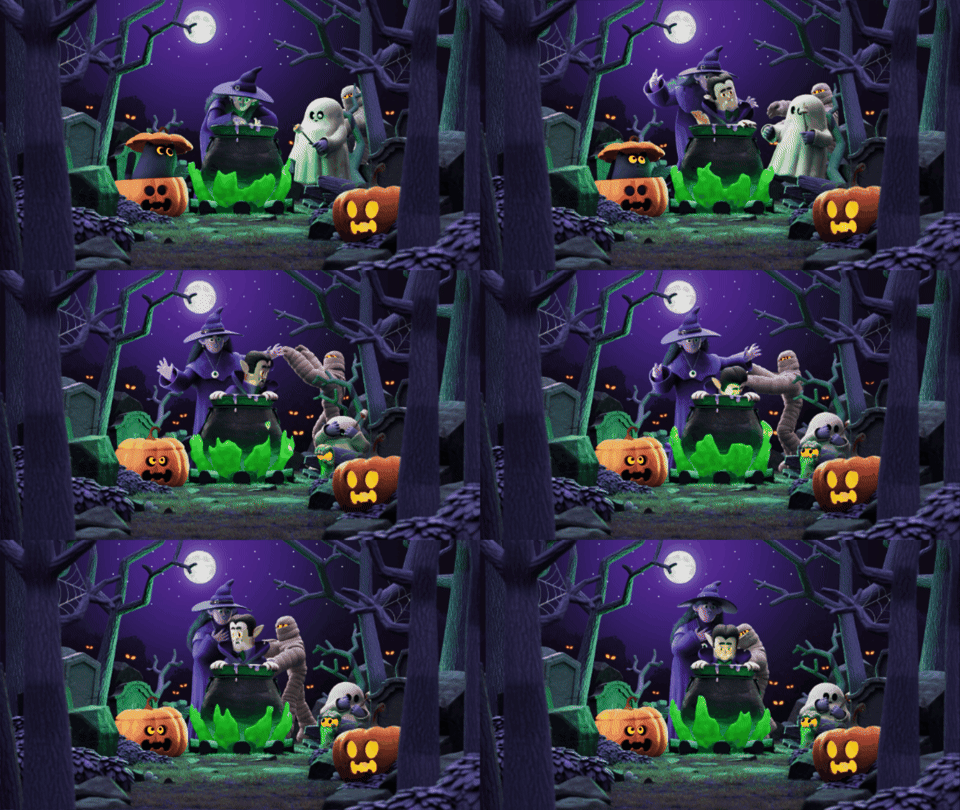
Arcade provides endless Halloween spookiness with their latest animation for Apple bringing a playful and wicked sense of energy to the table. We’ve also been informed no vampires were harmed during the making of the film!
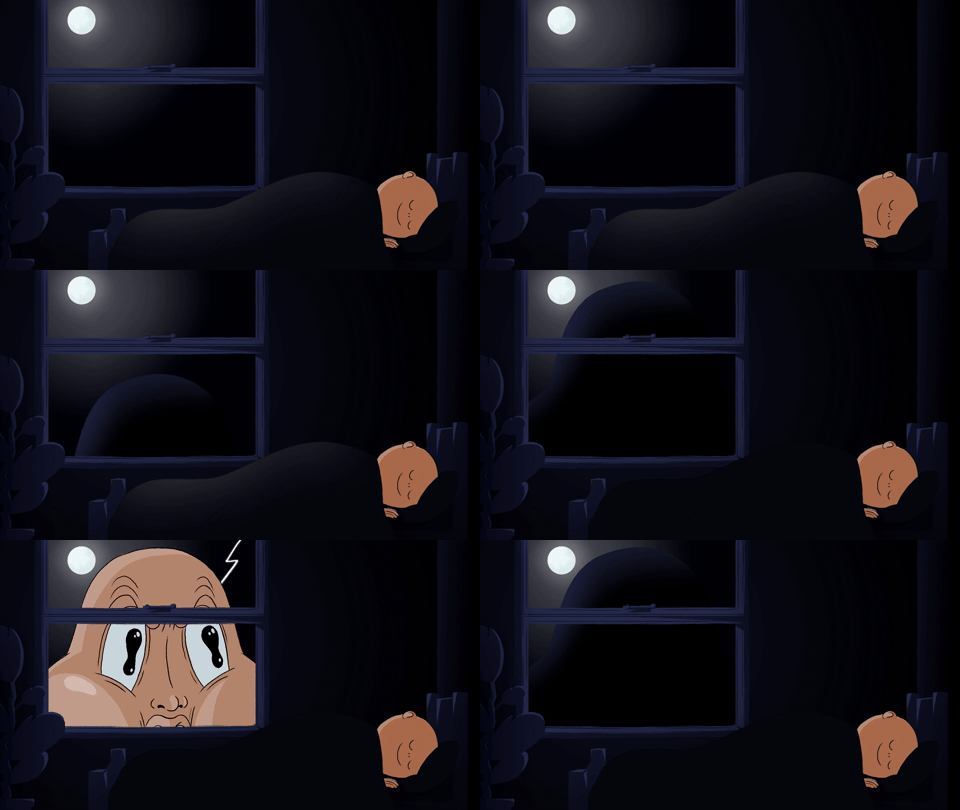
Ed and Nelly over at Orca have done a few projects over the years for the scariest holiday of the year. Including their delightful deranged ‘Halloween’ short that creates a sense of dread and unease in what can be described as an existential chase sequence.The animation style is reminiscent of prime Cartoon Network if it fused with the unsettling body horror of John Carpenter’s The Thing which is to say it’s pretty messed up…
Here’s what Orca had to say about the film – “We wanted to create something for halloween and thought about those nightmares you have when you’re running from something and you can’t seem to get away – that was the starting point. For the imagery itself we didn’t take influence from anything in particular, we just started drawing and came up with this monster which we found quite funny/ terrifying. We then filmed video reference for the animation as this is always really useful for timing and capturing acting decisions that you might not think about when drawing. For the background we wanted to continue on this dream/nightmare train of thought and created a barren desolate place where you would always be able to see the monster chasing you.”
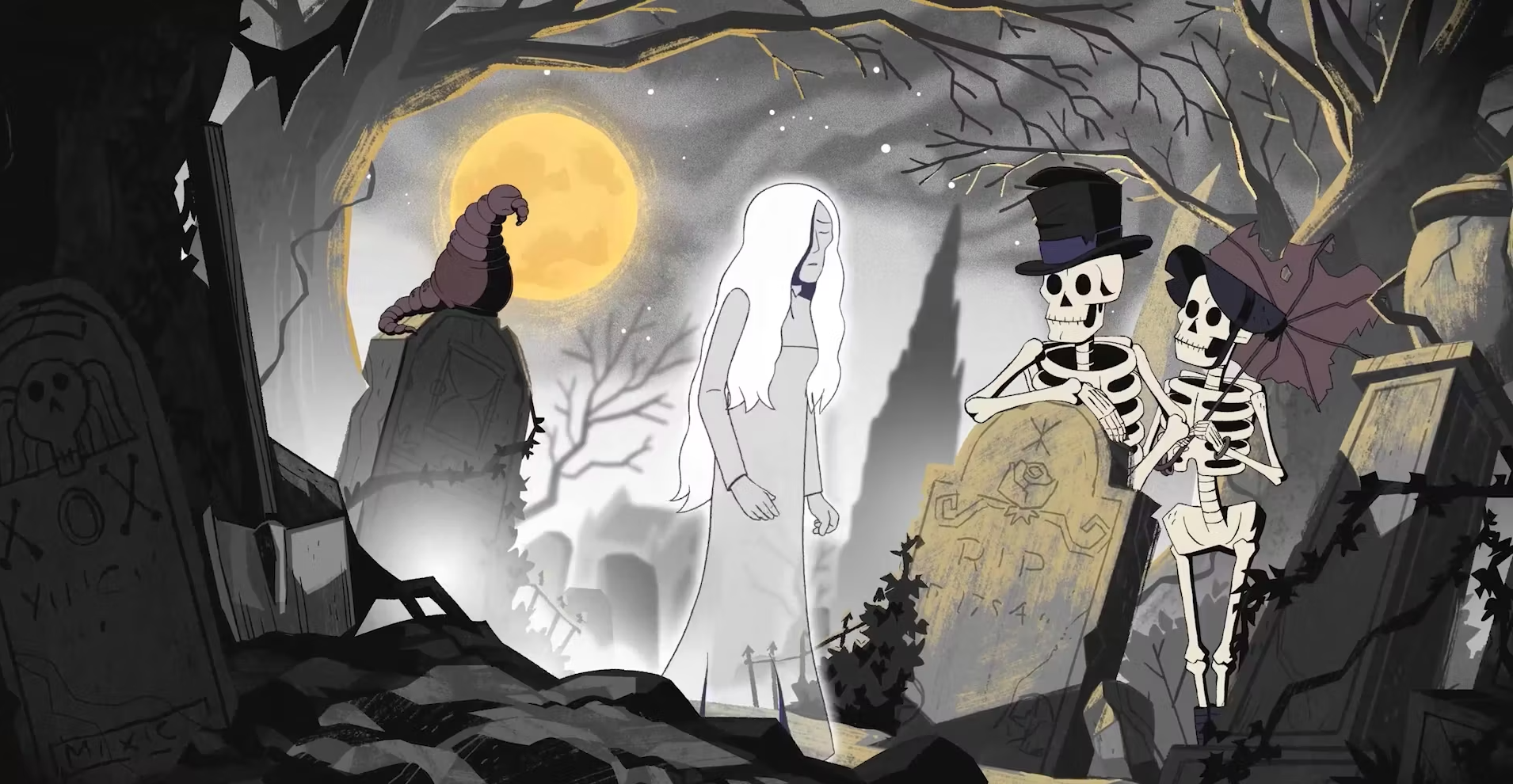
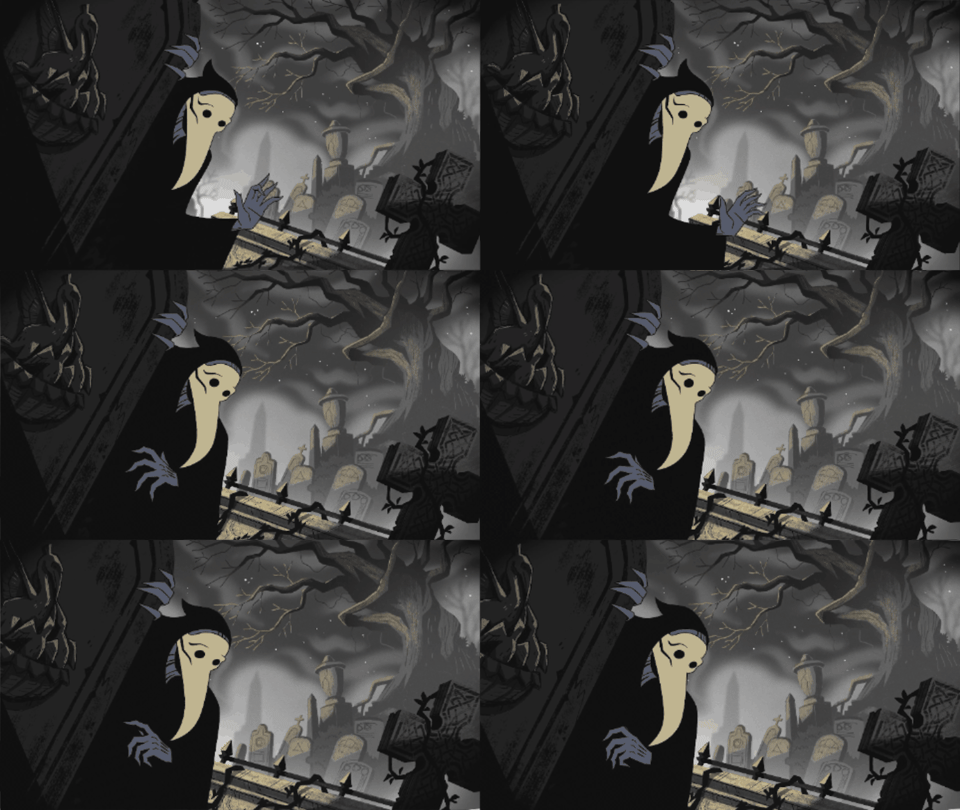
Another ghoulishly horrifying project Orca worked on was for a show within a show for the fifth season of the BBC and HBO show “Strike”. The animation is inspired by point and click video games. Perfectly blends Orca’s trademark style with the themes and atmosphere of the programme.
Orca discuss the creative process working on Strike – “At the beginning, the main point of reference was the artwork of Jan Pieńkowski, however as we developed the look further (with production designer Hugo Cuellar) we moved away from pure silhouettes as we wanted to show the character’s expression and all the details of the heart character. The use of shadows, silhouetted shapes against a marbled sky carried through though, which we think works really well. For the video game sections, we looked at video chat games such as Club Penguin and then wondered how they would look with a more gothic twist. It was also important for the plot that we referenced a real section of Highgate Cemetery, which proved a really rich source of inspiration when it came to the types of architecture and foliage we included in the background art.
Working with the client, (Bronte films, the production company that makes the Strike series), was really fun and super collaborative.”
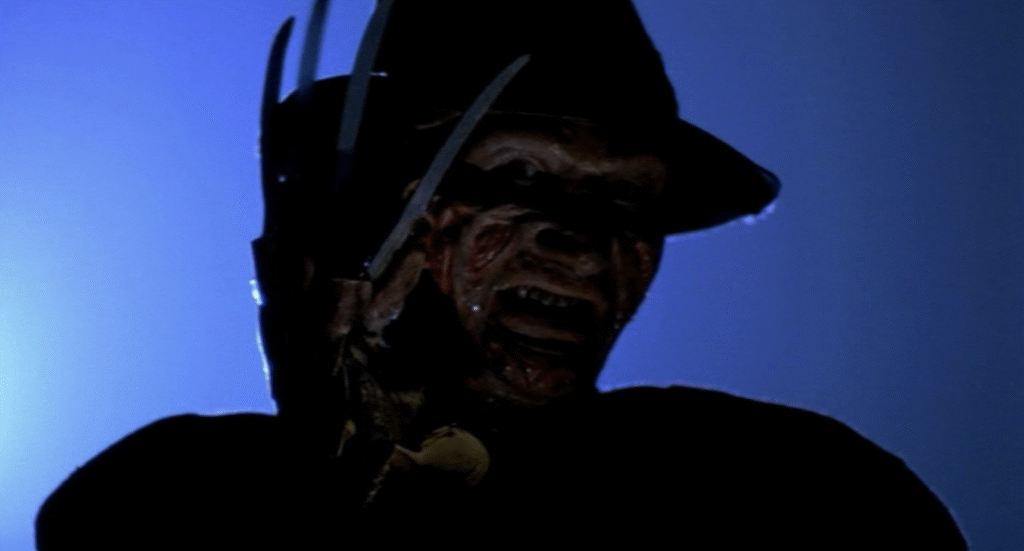
Ed and Nelly shared the films that scared and influenced them. Ed: “I was particularly scarred by Nightmare on Elm Street, which I saw when I was 14. It really stuck with me and I definitely had that in mind when we created our first Halloween microshort.”
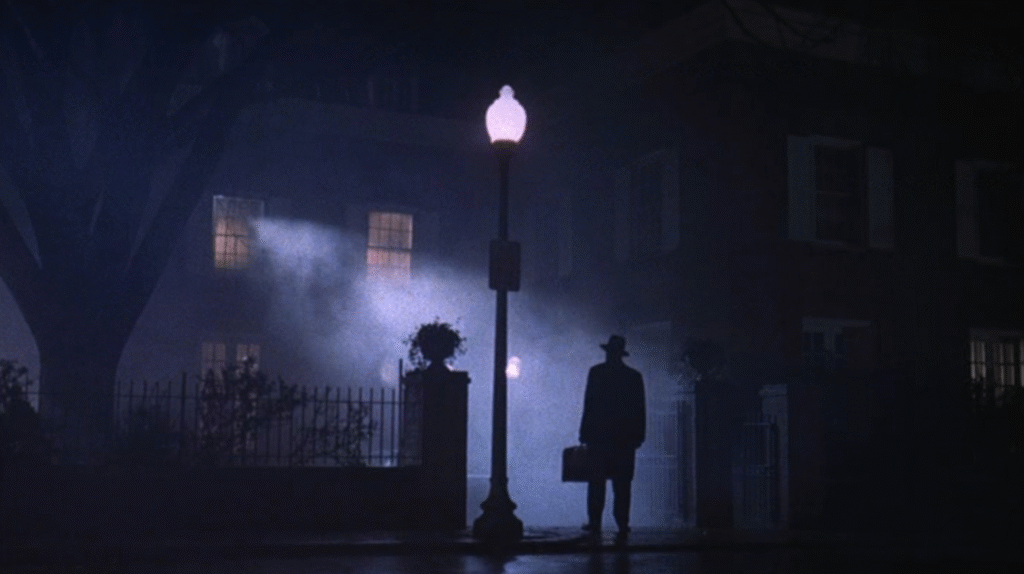
Nelly – “The Exorcist is one that really disturbed when I was young (and still does) – it’s so scary, but also grotesque and incredibly uncomfortable to watch. It must have influenced something on a subconscious level!”
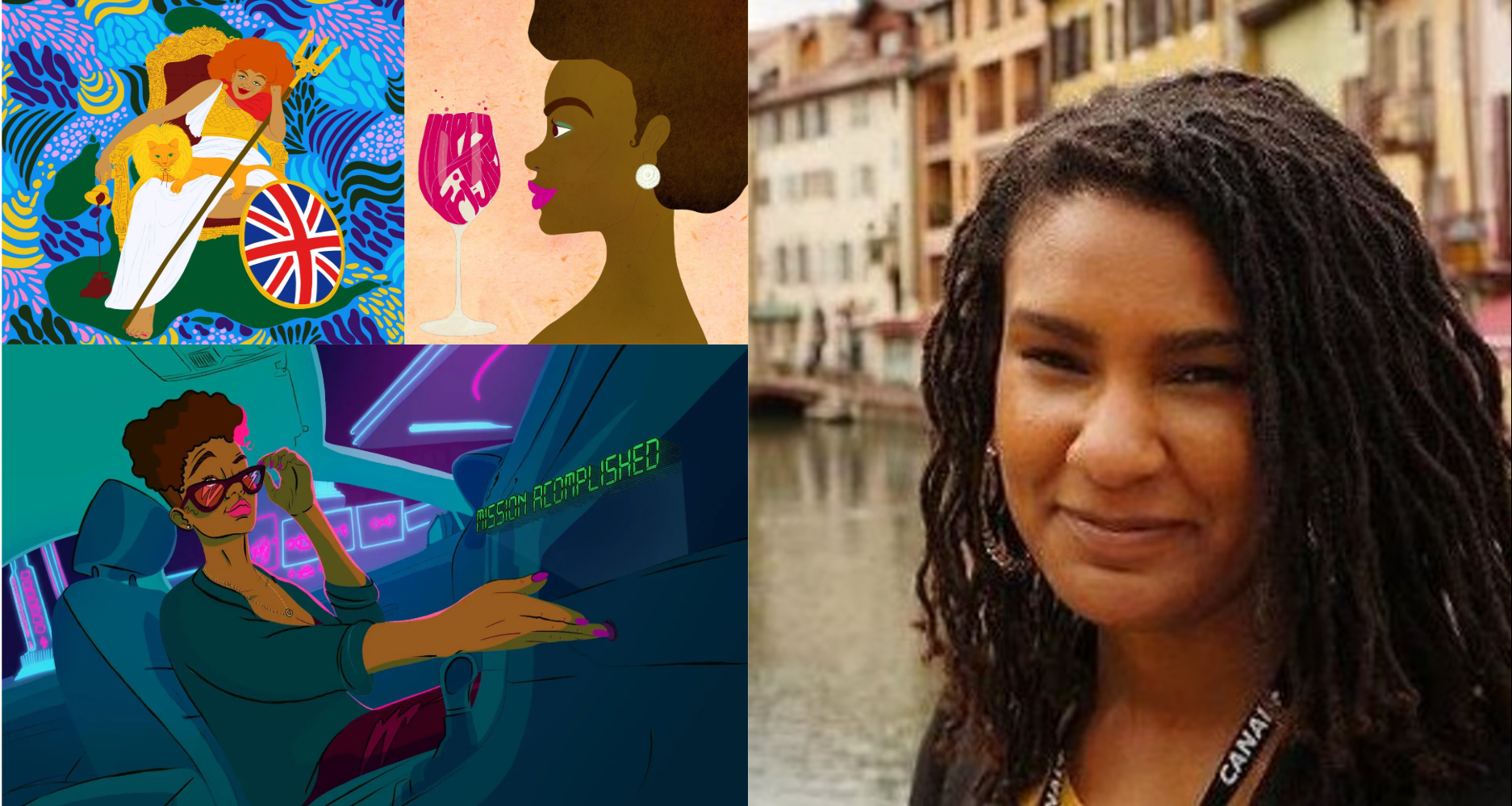
Many artists are satisfied with owning one style but not Corinne Ladeinde, she thrives on experimentation, playing around with different styles of animation. Her work spans across directing, design animation, illustration and a lead compositor.
Her short film ERNESTO garnered multiple awards capturing the imagination of both parents and children alike. While working on projects such as The Snowman and the Snowdog and We’re Going on a Bear Hunt! for Channel 4 and bringing her talents to big name clients like Dove, Bach and Liz Earle. Her adaptability to create something visually unique for each project shows with her truly original body of work.
In our latest edition of Getting Down and NERDy we caught up with Corinne to discuss her experiment approach to animation and directing.
How many different methods of animation have you used over the years and what do you enjoy doing the most?
My experience as a director or in compositing, whether working as part of a team or supervising, has introduced me to many different styles and mediums, from digital 2D cutouts mixed with drawn animation, 2D or stop-motion composited with live action, to sand! I’ve enjoyed all for different reasons but I’ve mostly enjoyed working with 2D cutouts with hand-drawn elements as it’s flexible and fun to work with (my) illustrations and bring them to life, it’s where I feel at home.
Could you tell us a bit more about the process of composting in animation?
It really does depend on the project, that’s part of the beauty of it. As a compositor, it’s my job to bring together all of the elements, make sure the layering etc is working correctly, make the elements feel like they belong and then push them even further. For example when working on a project that blends 2D animation with live action I need to pay attention to whether the shadows I’m creating for characters blend in seamlessly with other shadows in the liveaction plates, are they pointing in the right direction, where is the light source, check black and white points accordingly, apply any grading and SFX necessary and making sure the characters feel like they’re in that live action world.
On a recent project I supervised, the brief was to ensure we couldn’t see much competition at all! It was very much about maintaining the storybook charm of the project and ensuring the characters became a part of the beautifully painted backgrounds, as well as adding a bit of sparkly FX where needed. Funnily enough, I find this process really rewarding and sometimes if you can’t see my work, that means I’ve done a good job!
How much experimentation do you have when composting?
Again, it really depends on the project and the director. Some directors know exactly what they want and there isn’t much wiggle room or need for it. But many times I’ve been given a shot and told… “I’m not sure what we want here… What do you think…? Have a play!” It’s only through experimenting, having a go, and getting it wrong a few times that you’re able to build on something and then you can work with the director and move things forward.
Most of the time, it’s a fun creative process, as with all of the other roles on a production, it’s your job to facilitate the director’s vision as well as offering support and guidance where your expertise may lie. I’ve always felt the best directors recognise this and allow their team to do their jobs with guidance. I like to take this approach when I’m at the helm. Sometimes you know exactly what you want and you can drive it home, but other times it’s good to be a little more open and allow something to develop in a way you might not have expected.
Maybe you could tell us a bit more about the surrealism approach a lot of your work adopts?
My grad film ERNESTO is about a boy who’s teeth spontaneously become musical. The original script was quite similar to a United artist’s cartoon called Gerald McBoing Boing. I loved the script, but I wanted to make Ernesto’s affliction something more physical that he didn’t have any control over nor could obviously be seen. While I was at the NFTS I kept a sketch book on my bedside table so I could jot down any dreams that could be of interest. One dream involved a chorus of opera singers wearing tuxes who just happened to be teeth. It was a bit bizarre but it felt fun and I liked how there was potential for them to be their own little characters. It’s like cute body horror… maybe that’s my thing! When I think back, one of the films I loved was How to Get Ahead in Advertising.
A story about a man experiencing a moral existential crisis who grows a talking boil on his neck. I think what draws me to this theme is that these “afflictions” are part of the character. It’s either something that has to be dealt with or accepted. There’s no escape! Turning these everyday feelings into physical manifestations is a fun and quite literal way to explore these experiences. It’s a way of bringing them to the forefront and being forced to confront them head-on. One of the things I love about film (particularly animation) is the suspension of belief and that, quite literally, anything can happen. I find comedy and sometimes (cute) body horror to be a fun vehicle to explore these themes. It might all seem quite surreal but there are very real emotions behind it.
What other forms of animation would you like to experiment with in the future?
I’ve been experimenting with 3d in my downtime (when I have it!) I’d love to experiment with it more. But, with the dawn of AI that is capable of creating the kinds of footage and imagery we’re seeing, my concern is that traditional modelling could become redundant. I’m aware that even though I feel there will always be a place for content with that human touch, there will be pressures and potentially opportunities to get to grips with what AI will no doubt bring. I’m interested in approaching AI as yet another tool if possible. Whether that’s using it to speed up current pipelines and work processes or for image generation that can be experimented with, edited and worked into further by human hands.
In every walk of life and within any job role we all deal with challenges both internally and externally we often tell ourselves not to let our private lives interfere with our work-life, however is it really that black and white? With May being the month of Mental Health Awareness we wanted to have an open and honest conversation about how as individuals we find ways to balance our well-being with our work output. The advertising industry can be a savage and unpredictable environment with tight deadlines, days of endless calls and meetings that sometimes can feel like dead-ends rather than destinations. An emphasis on freelance work can sometimes add extra pressures of long-term stability and career growth, financing projects can become an upward struggle and sometimes the work days can be long, meaning spending less time with our families and friends.
There are no straight answers to this topic and we all do our best to find ways of finding that perfect balance between productivity and relaxation, knowing when to call it a day, knowing when we need to recharge our social battery. We all come from different walks of life, may it be culturally or financially, each of us dealing with our own insecurities or anxieties and as a society we like to pretend that we don’t. We’re programmed to think we have to be perfect all the time but sometimes the flaws are what make us succeed, it’s how we grow and learn.
Thankfully the conversation around mental health is becoming less taboo and more of an open dialogue and In this article we wanted to get involved in the conversation
THE ART OF TRYING NOT TO OVERTHINK – LOUIS HUDSON (WRITER AT NERD)
For me moving to London was the first daunting step into the creative and advertising industry. After staying in Leeds for both of my university degrees I finally decided to kiss goodbye to my affordable rent and family. My first attempt however was compromised by the global pandemic (just my luck) when the time did eventually come to move down. I had a little bit of PTSD from the pandemic. All that time stuck in lockdown, overthinking, would I be good enough, will I fit in. Imposter syndrome rearing its stupid annoying face. Which I think is a universal thing we all go through at some point in life but I think for me it was exemplified by the pandemic suddenly swapping working from home to attending multiple networking events and having to build up a new social life for myself provided a little bit of whiplash.
Coming from a traditional northern working class background I wondered whether or not I would fit in, whether my accent would be patronised or even understood and apart from the couple of occasions I’ve been mistaken for being Scottish I can confirm people can understand me just about…
For me I learnt that giving myself a schedule helped with the anxiety, even something as simple as going for a walk once a day or finding time to do a bit or personal admin would be a way for me to focus my mind. Post pandemic I’ll take myself to the cinema as much as possible because going to see a really depressing foreign romantic drama really makes me feel better about my life. I also write comedy, which is something I’ve continued to pursue since studying film at university. Since moving to London I attend London Comedy Writers and I’m always trying to get projects on the go, so it’s all very exciting but also gives me something to focus on outside of work hours that feels stimulating and creative.
BALANCING CREATIVITY AND PRESSURE – VIKTORIIA (MARKETING & PHOTOGRAPHY AT NERD)
Growing up, I always knew I was meant to do something creative – something that had a spark but also a slice of structure. I’ve always felt a strong drive to perform well in any role I take on, and with that comes pressure. When I moved to the UK, that pressure only intensified, it became about building a whole new life from the ground up. New friendships, new networks, and new opportunities.
Because social media is such a big part of what I do, there’s a constant expectation to be present. Whether it’s about posting the next big idea or simply showing up on people’s feeds, the pressure to stay relevant can be overwhelming. And while I sometimes get hit with that “who cares?” mindset, the reality is every single job or opportunity I’ve had has come from being online, from putting myself out there, from connections made through the digital world.
That’s the double-edged sword of it. While I owe a lot of my career to social media, my mental health often suffers because of it. Imposter syndrome creeps in, feeling like I’m not doing enough, even when I know I’m going above and beyond. Some days, depending on where I am in my cycle or just how much I’ve been carrying, I’ll cry it out. I’ll spiral into “I’m not good enough” thoughts and that’s when I really lean on my husband. He’s my anchor on those tough days. But then, just like that, I bounce back. The very next day I might feel like I can take on the world. I’ve also been incredibly lucky to work with people and clients who are genuinely supportive, and that kind of environment makes a huge difference. The same goes for my friends, just having someone who listens can lift the weight a little.
Being creative in the fast-paced, ever-evolving world means you’re always expected to innovate, stand out, inspire. It’s a lot. But I’ve learned that having a support system and grounding routines can help massively. For me, it’s simple things – going for a walk, spending time in nature, hiking up a mountain. Maybe that’s why I’ve gravitated towards hiking over the past two years, it gives me space to breathe and turns off my loud brain.
At the end of the day, it really is a journey. Some days feel weird, others feel heavy, but there’s always something to learn.
WHEN TO ASK FOR HELP – MARGAUX MADAMBA (SOCIAL MEDIA MARKETING AT NERD)
For years, I knew I was struggling with a mental health disorder but there were just so many things hindering me from seeking professional help. I thought if I just got to know myself more that maybe navigating work and life would be easier. I thought that I needed to accept myself more, to be kinder to myself, and to be more patient with myself. I read so many self-help books, listened to my mentors’ advice, and browsed through pages and pages of Reddit and Google threads. A lot of those things helped in their own ways — but it wasn’t enough.
Coming from a third world country, I knew it wouldn’t be easy to seek professional help for my internal struggles. I had assisted my younger sibling in the past with their own mental health problems and searching for psychiatrists, wards, or organizations that could help us was really difficult. We learned one thing that day: If we needed immediate help for our mental health, we were looking in the wrong places AND we were living in the wrong country. It was a very sad realization. Being the eldest daughter meant I’d have to be there every step of the way during my sibling’s own struggles. This was when I was educated deeper about how to properly seek professional help.
Five years after my sibling’s struggles, I finally got the courage to seek help for my own problems. Post-pandemic paved the way for telemedicine or telehealth apps which made it easy for me to book a psychiatrist or psychologist. It was at the age of 28 when I saw my first psychiatrist and was diagnosed with General Anxiety Disorder (GAD) and Post-Traumatic Stress Disorder (PTSD). I was prescribed medicine for my anxiety but after a few months, I felt like I was just an outsider watching my life happen before my eyes. The medicine wasn’t working – and that was okay. During this journey, I learned that there are many methods to seek help and not every method will work for an individual. I didn’t stop trying and experimenting. I looked for another psychiatrist who focused on talk therapy which gave me relief after just one session. I have felt more peace within myself ever since.
As creatives and freelancers, we’re used to working and moving independently. Throughout the years, I got used to working by myself and finding remedies in my own ways. It worked until it didn’t, and I wish I asked for help much sooner – I bet my 22-year-old self needed it a lot. If you’re reading this, I want you to know that it is okay to ask for help – ask for help when you’re afraid, ask for help even when you can’t afford it, ask for help even when you’re succeeding in life. It doesn’t matter where you are or who you are, it will always be the right time to ask for help.
VALUE OF PEOPLE IN OUR LIFE – MILANA KARAICA (FOUNDER/EXECUTIVE CREATIVE PRODUCER AT NERD)
I started in this industry very young – at the age of 17.Through the early years of my career, it didn’t matter to me that I didn’t see women and people like myself around me, as actually, I never really had before either.
Taking inspiration from wherever I could, I excelled in my roles and made my way to executive producer. There were bumps in the road of that journey that were not easy to overcome but when failure is not something you allow yourself to accept, you keep pushing harder with each setback. It wasn’t until I was in my early thirties – by which point I was running NERD Productions, a creative production company bringing diverse talent to our industry – that I started to feel extremely lonely as a female in a leadership role. NERD was my first baby, my family, and my passion, but I wanted a family at home too. Best of both worlds was the goal I wanted to achieve through some miracle it seemed.
With so much going on at all times and hours of the day it is hard to stop to catch a breath, let alone think about your mental health and wellbeing. I try to be practical, and find time to still show up for my young kids where and when needed while doing the same for my team and clients.
Sneaking in some alone time for a quick facial or getting my nails done is my time to simply do nothing. Allowing time with people I love… a coffee with my sister, a quick lunch with a friend, a little time with my forever cheerleader- my partner, even if it’s just a cinema date or a walk in the park. All these seemingly small things and times give me endless positive energy, time to reflect on the life we have built and things we still feel we want to pull off before we are ready to live the quiet life!
So, having said all that, in conclusion – we all need that one person in life or if we are lucky enough, a few of those gems, that will be your source of support, empowerment, inspiration or simply good vibes. This is what really matters and what helps keep me going when times are tough.
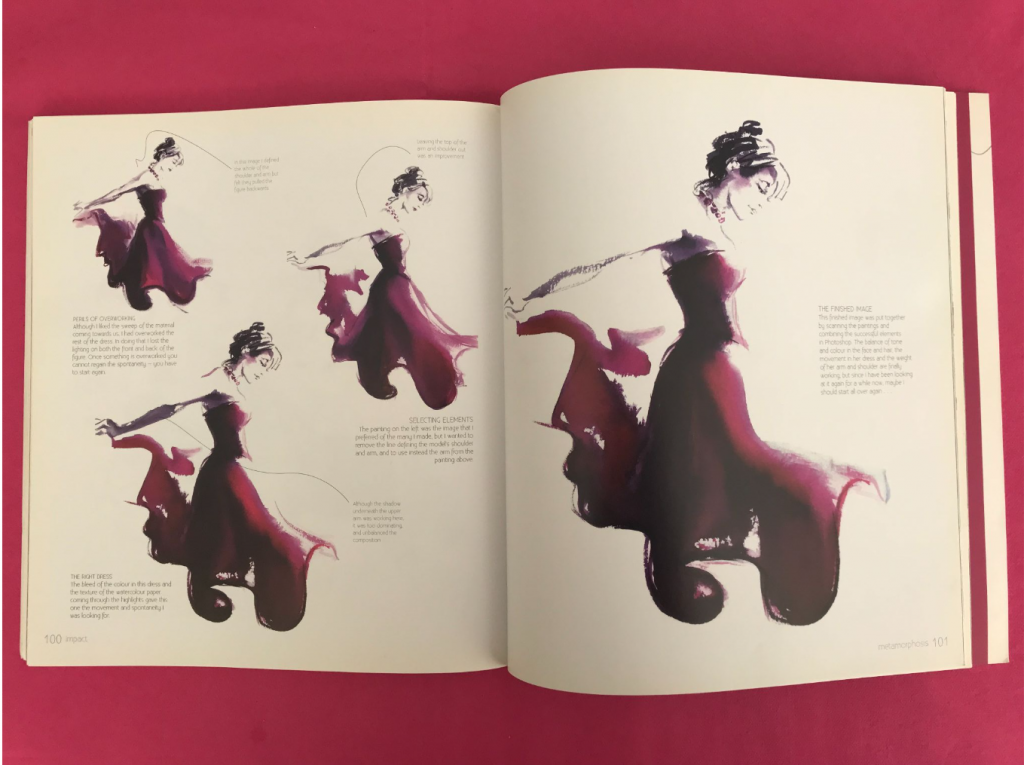
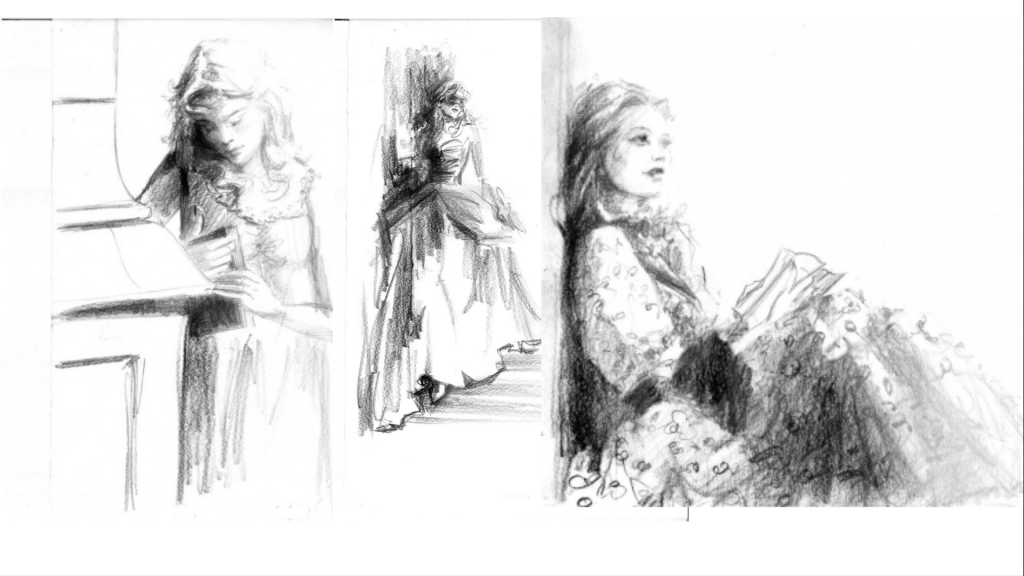
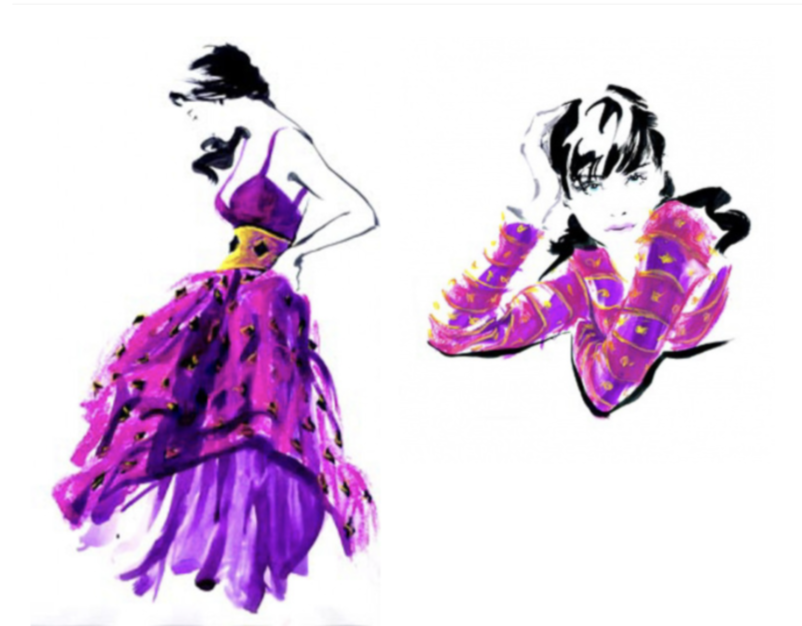
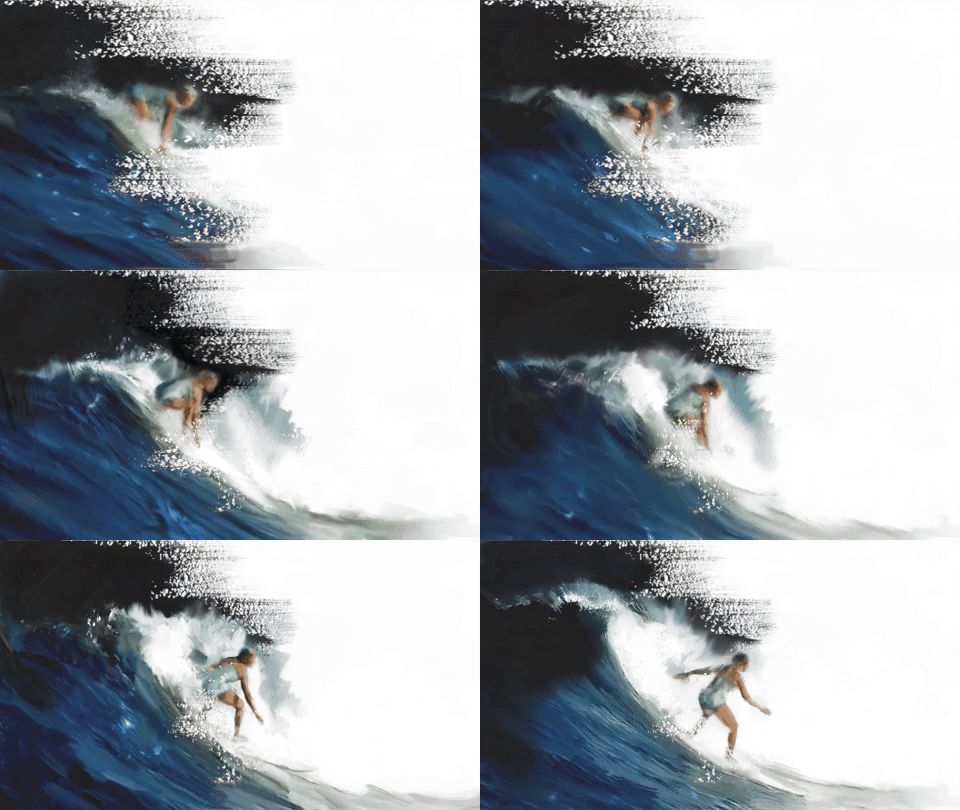
With every brushstroke Sharon Pinsker tells a story that captures and captivates the viewer with images that last forever. Her authenticity and love of the craft shines bright like a beacon with her light inspiring others to pick up the paintbrush and paint. Her book ‘Figure: How to Draw & Paint the Figure with Impact’ is like the holy bible for those wanting to learn the art of mastering the human figure. Sharon’s knack of capturing movements has led her into the world of animation and live action films, collaborating with other barnstormers within the creative industries. From working on fashion campaigns, book covers and celebrity portraits her work shape shifts effortlessly into different mediums and formats.
We recently caught up with Sharon to discuss her awe-inspiring journey not only as a creative but as a person, to further understand what shaped her work. Like us mere mortals, artists also go through the same self doubts and anxieties, and it can often be the daily obstacles that help shape the best art.
When you started out as an artist did you ever think you would publish a book that would act as a resource and a guide for other artists?
I can’t honestly answer that question because I never “started out as an artist”. As far back as I can remember I was only happy if I was making something, usually a drawing or a painting. My artwork was more of a compulsion, than an ambition. So it was more by luck, than by design I discovered I was able to make a living out of my addiction. I certainly never imagined anyone would be vaguely interested in reading about my work process, let alone want to publish a book about it. So it was completely mystifying to me when a publisher approached my agent and requested a meeting to discuss commissioning a book.
I remember the look of abject horror on my agent’s face when I turned to the commissioning editor and enquired – “Are you sure you have not confused me with someone else? Have you seen my work ? I really don’t think anyone would be interested in reading about how it’s done.”
EXAMPLES OF SHARON’S STORYBOARDS/VISUALISATIONS
I still think that book was successful because I shared the struggle I have with achieving goals and meeting deadlines, rather than the work itself. The questions and conflicts that arise with all aspects of problem solving… and the continuous internal dialogue that we all have while working. The title was the editor’s choice, not mine. I felt it implies that I know “How to…”do something -but whoever reads it will quickly realise I am still working it all out myself! That’s ultimately how I see my work anyway, like the “working out in the margin” never as a finite piece.
I still get messages from people telling me how helpful the book has been to them, and it is listed as recommended reading ,even now. I am thrilled by that of course, but equally amazed.
Even more surprising is to see it mentioned in quite unexpected places!
Did your distinctive style come naturally or was it something you developed while at Central Saint Martins and Parsons School of Design?
It depends on what you mean by “style”, maybe the images just end up looking the same .That is entirely unintentional though because more often than not, I am trying to do different things all the time. My work is developing and mutating with every new project. I don’t start with a particular look in mind but every job will dictate how I approach it. Invariably it goes through many incarnations.
Yes, during this process I will be drawing on things I learnt while at CSM and Parsons but also everything I have done since then. Nothing is ever wasted, even if discarded… and a lot is discarded. Everything I do is a compilation of past trial and error.
It can be a hard life making a living as an artist, did you ever go through any self doubts early on in your career?
Every single day.
What do you think is the biggest obstacle for young artists in today’s environment?
I think young people today have so much more to deal with, the challenges must be overwhelming. When I was at St.Martin’s, as it was then, we had three choices for a degree course after Foundation, these were Fashion, Graphics and Fine Art Now young people have to choose from so much more including live action film, 2D animation, stop motion, photography, graphics, cgi, motion graphics, motion capture, VR, WebDesign, AI. to name a few ..there is so much pressure to specialize which takes time and experience which means less time for development and growth in other disciplines.
The advantages of more advanced technology and accessible information at their fingertips doesn’t lessen the disadvantages of not having any more time or freedom to experiment and find their own focus. I wanted to paint people so I chose to study fashion because I realised I would have more access to life drawing classes. Fundamentally we had to know how clothes would work on a body. If I had chosen Fine Art, back then the life drawing classes were few and far between, they had been abandoned in favour of Abstract and Conceptual Art.
I don’t know if it would be so easy for me today to study Fashion and then Fashion Illustration but I do know that if I hadn’t had the chance to experiment in those fields then my work would not have taken me on the journey that ended up with my working in film and animation which was a place that my illustration work seemed to fit best.
The pressure of having to choose a career in itself is a terrifying prospect for a young person when they are trying to find their way in a scarily competitive field. They need space to make mistakes and learn from them and how valuable they are… more valuable, in my opinion, than their successes.
So to answer your question the biggest obstacle for young people, I think, is lack of time to find their feet before having to join the race.
You’ve worked with fellow NERD director Shay Hamias, could you maybe tell us a bit more about that dynamic?
Shay is fabulous to work with. He is one of those people that can make anything work. However challenging it might be, he makes it look easy. I remember if ever I saw a problem he would see a solution.
He smiles a lot too and that makes a world of difference, collaboration with Shay was a joy!
I can’t wait to craft with him again.
Do you still feel like you’re learning and growing as an artist?
Absolutely. It’s that eternal paradox, possibly Aristotle? ” The more you know, the more you know you don’t know “.
The learning and growing process only increases the more you do… which is all the more frustrating because, of course, then you have less and less time!
Whether you’re just starting your painting journey or looking for a source of inspiration we highly recommend reading Sharon’s ‘Figure: How to Draw & Paint the Figure with Impact’ and to see more of her wonderful work click here.
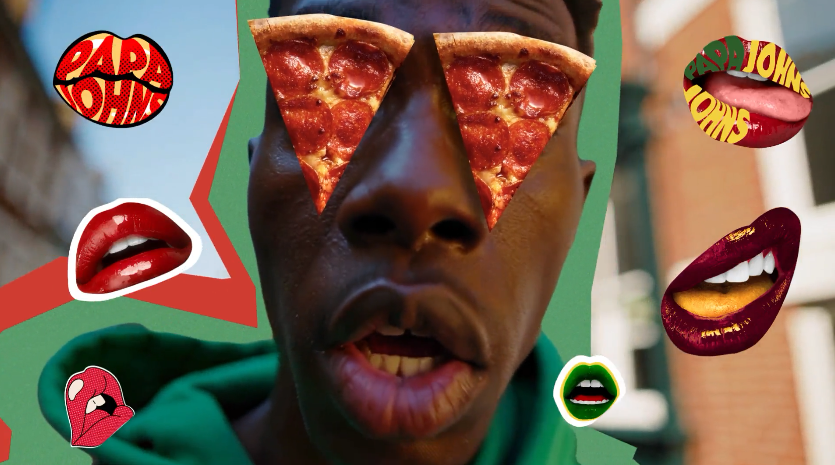
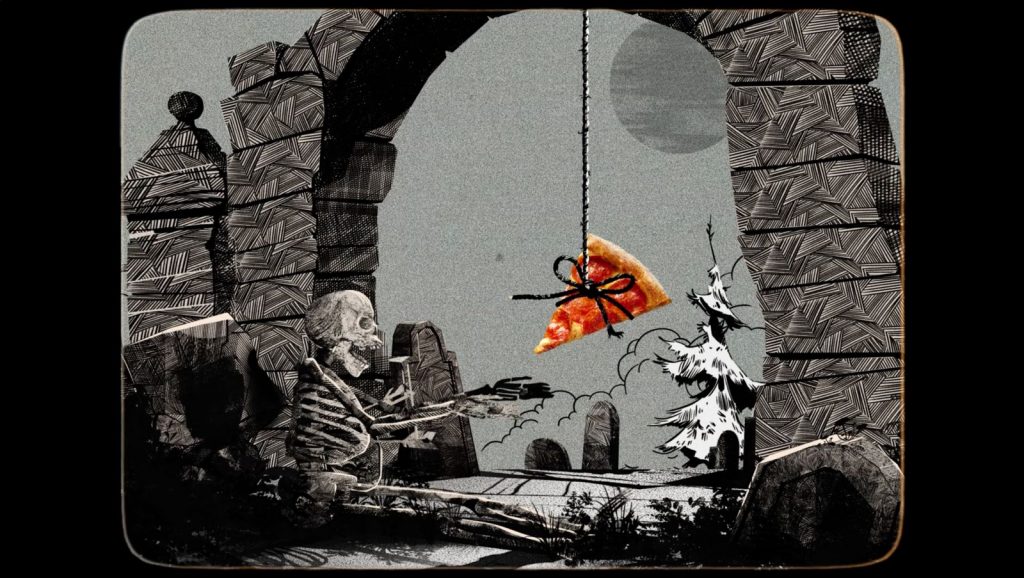
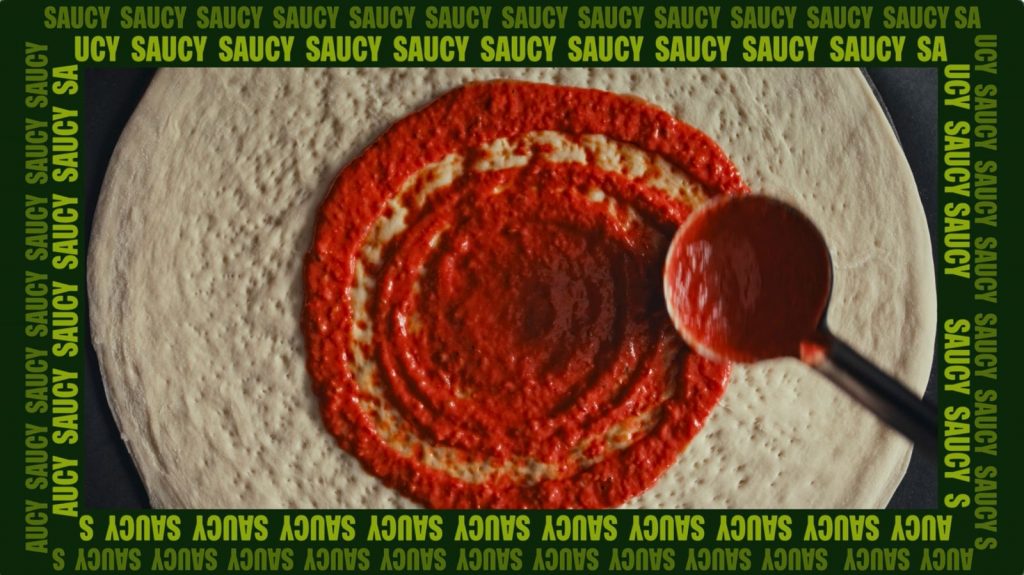
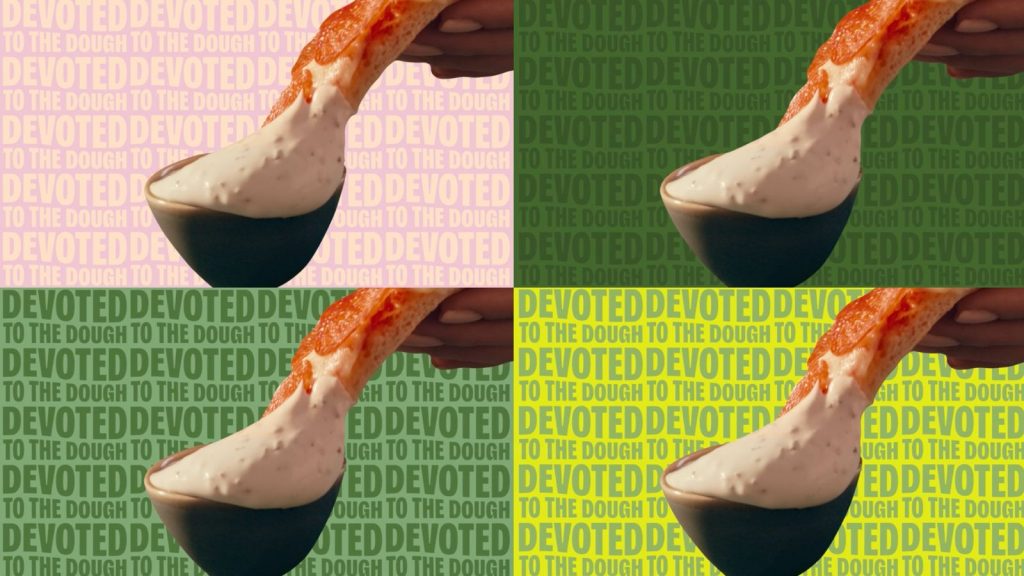
The new Papa Johns rebrand film is a love letter for pizza enthusiasts all around the UK, a kaleidoscope of cheesy saucy goodness. Centered around its pizza-obsessed consumers and the brands own commitment to better pizza and superior ingredients, we are delighted to share with you the “DEVOTED TO THE DOUGH” TVC.
The brilliant creative chefs behind the new campaign cooked this one to perfection, deserving of a Michelin star or too. The film was brought to life using various mixed media techniques like cutouts, photography, 2D animation, AI generated assets and glorious food shots. All of that came together in a collage of bombastic colours and flavours. Weaving between delicious live action ingredients and animation which brings playful, vibrant and fun energy to the piece.
Director, Ahmet Iltas shared his experiences working on the project “Making the Papa John’s film was an incredibly exciting experience for me. The creative challenge of bringing together the idea of pizza obsession and PJ’s DEVOTED TO THE DOUGH across various media and visual styles kept things fresh and dynamic throughout the process. From intricate close-ups of the product to quirky moments that introduced relatable humor and personality, it was about finding a balance between the love of pizza and making something that would grab attention in today’s fast-paced, content-saturated world.
The mixed-media approach allowed us to explore multiple layers of storytelling playfully, merging real footage with illustrative elements and graphic transitions. This kept the visuals both engaging and unpredictable, which was something I really wanted to achieve from the start. It’s always fun to experiment with different mediums and see how far we can push the boundaries while still staying true to the brand’s identity.”
Ahmet adds “By combining traditional live-action footage with AI-generated elements, design, and animation, we were able to create something truly innovative. The result is a next-generation mixed media film that feels fresh and forward-thinking. It’s also a reflection of where modern storytelling can go while keeping the essence of the brand intact.”
Milana Karaica, Executive Producer, adds – “Being a part of such a big rebrand is a huge responsibility! Having said that with our collaborative agency and trusting brand partners, this project was still such a fun and dynamic production from start to finish. This approach also allowed us to make something that looks and feels fresh. We ended up with a film we are excited to share, that really speaks to the tastes and attention spans of our audience.”
And if the delectable imagery and whimsical animation weren’t enough to win you over, the film also features a catchy tune that will be imprinted into your head for the foreseeable.
Papa Johns DTTD credit list:
Agency – Bicycle ECD: Graeme Douglas Creative director: Leigh Gilbert Creative director: Scott Andrews Business director: Rosie Bloxham Senior account executive: Izzy Nott Senior producer: Bethany Easton
Production Company: NERD Productions
Director: Ahmet Iltas Executive producer: Milana Karaica Producer: Phil Burgess Director of Photography: Simon Paul Lead animator and head of compositing: Selahattin Iltas Art director: Saeed Noroozi Food stylist: Kostas Stavrinos Colourist: Danny Atkinson Music: Resister Music Audio record & mix: Page Not Found
In the latest “Get to Know” article Louis caught up with visionary filmmaker Marta Chierego to delve into her stunning and global spanning filmography. Her work is a rich tapestry that perfectly balances ambitious and sophisticated cinematic language with stories that feel handcrafted and intimate, which is no easy feat to pull off even for the most seasoned of filmmakers. So let’s all gather around the metaphorical campfire as we explore together what makes Marta’s distinctive brand of storytelling so special and how her craft was shaped and molded over the years by the people who inspired her.
Let’s rewind back to a young Marta, did you always have the goal to be a filmmaker or was it something that you came into at a later stage in life?
I fell in love with cinema at a very young age. Some of my earliest memories are of Star Wars and 2001: A Space Odyssey – even Twin Peaks, although I realise that’s not great publicity for my mom . And while I grew up appreciating many art forms, I watched films relentlessly and probably obsessively more than anything. I remember the experience of watching a film and ‘knowing’ that the camerawork was good, but not understanding why yet. Initially, I wanted to be an actor, so I immersed myself in theater programs all through high school. But when I moved to London at 19, I realised that what truly fascinated me was what happened behind the camera. Since traditional film school wasn’t an option financially, I enrolled in a hands-on program and started working on film sets, taking on as many roles as possible to understand the mechanics of filmmaking. That experience serves me to this day, as it gave me a deep appreciation for every department on set and a firsthand understanding of why every role matters. So, in a way, cinema has always been with me. The path evolved, but the passion never changed.
It’s funny when we first spoke I had the imagery of Terrence Malick imprinted into my mind as a visual reference for your own work, which is someone you ended up mentioning as a source of inspiration. Could you tell us a bit more about how his work influenced or informed your own filmmaking?
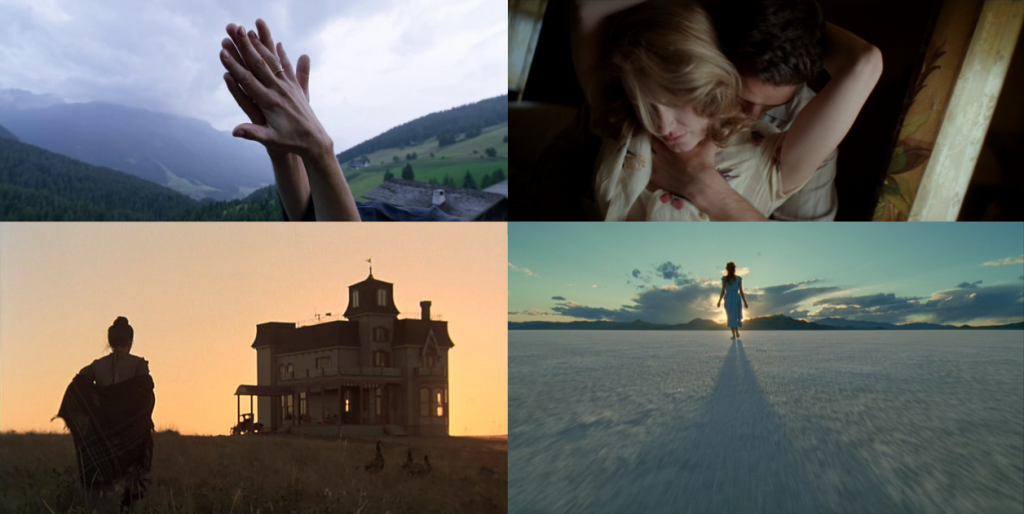
I was so touched to hear you say that my work reminds you of Malick. He’s had such a profound impact on the art of filmmaking, there’s truly no one like him. I still remember watching The Thin Red Line in theaters when it first came out and being completely transfixed by his style. What makes Malick so special, in my view, is his ability to create a cinematic experience that feels both poetic and immersive. His films evoke a sense of awe, an emotion I’ve explored in my own work. I’ve come to realize that awe has a profound effect on us; it enhances creativity, deepens gratitude and awakens something fundamental in our sense of being alive. We throw around the word ‘awesome’ so casually that we sometimes forget its true meaning. Regardless of one’s spiritual beliefs, his films have a way of connecting you to something greater, something beyond yourself. You don’t have to believe in anything specific – you just feel it. Which again is something that I seek to express with my work. A sense of presence, and an exploration of what some call the ‘Great Mystery’.
Terrence Malick’s poetic approach to filmmaking blends wild landscapes with intimate human moments.
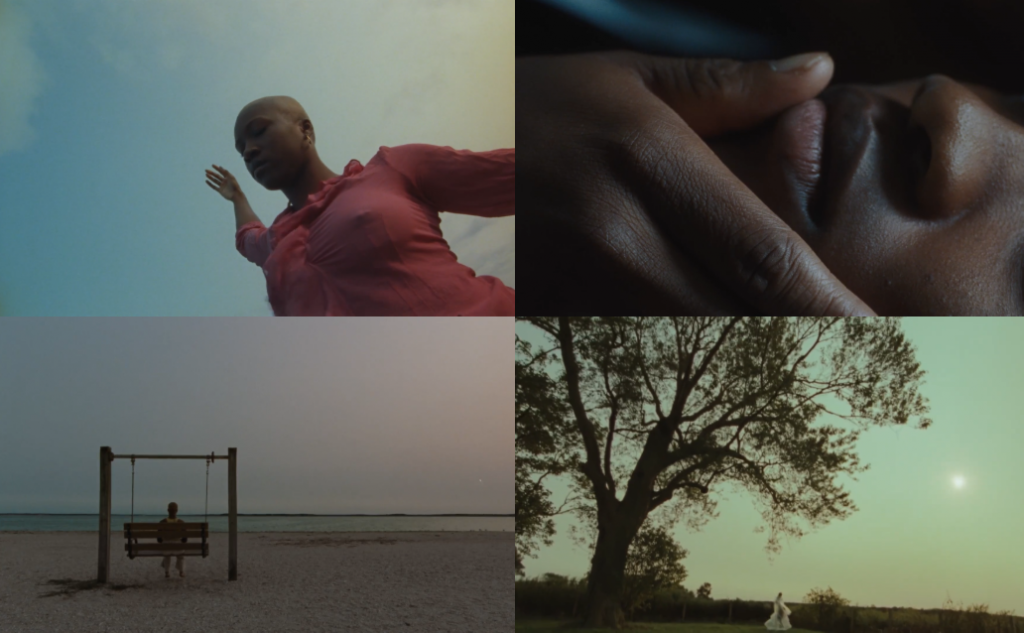
Marta beautifully captures the same sense of poetic scale and human interaction in the stunning ‘unconditional’ a film in which grand vistas collide with compassionate close ups.
Inspiration is a shapeshifter that can present itself in many different forms and sometimes at inconvenient times. Where do you often find inspiration when you find yourself searching for new ideas?
Creativity isn’t a linear skill. It has its own rhythm and you have to allow space for ideas and inspiration to find you. I love Julia Cameron’s invitation to regularly take yourself on artist dates. I consider a day well spent when it involves looking at paintings, visual art, listening to music, watching films and documentaries, as well as reading. I miss observing people more, as so much of our life has become digital. My approach to inspiration is both eclectic and voracious; I absorb a wide range of influences, but I can also hyper-focus and dive deeply into a single topic. For a long time, I thought I was being lazy or undisciplined if I didn’t immediately put pen to paper when trying to generate ideas. Over the years, I’ve come to realise that my creative process involves an essential marination stage, oscillating between expansive curiosity and intense focus and letting thoughts percolate until they begin to take shape. Sometimes they emerge as fragments, other times as fully formed concepts and eventually, they start to constellate into something meaningful that I can start building on. It’s a process and I’ve found that movement plays a key role in it. Being outdoors, walking, dancing, yoga, even singing – all of these somehow help shift ideas between the body and mind, allowing them to develop in a more complete form.
We see a lot of big brand commercials that can oftentimes feel like bloated product placements but people feel front and center of your stories. Could you tell me more about your process?
For me, the starting point is always the universal human experience. Whether it’s a beverage, a car, or a software, there’s human passion and intention at the core of every product. So I flip the script, I start with the human story and let that naturally guide how the product or brand fits into the narrative.
Of course, in a highly competitive market, brands want to stand out and a lot of work goes into that. But at the end of the day, what truly makes people remember a brand isn’t just the product – it’s whether they felt something when they experienced the story behind it.
I also think that modern marketing has really evolved into aligning a brand to the core values of the audience it’s trying to reach. So for instance, a brand might get behind a story that shows thought leadership within a space they know is of interest to their customer base. I love working on those kinds of briefs as they give you the highest chance to tell a story that feels rich and authentic.
Some directors are more confident behind the camera and others are more comfortable directing the actors but in the world of commercials, time is limited so how do you make sure you’re getting the best from the talent?
I wish I were Dr. Manhattan, so I could be ubiquitous 😀. Until then, my approach to commercial shoots is all about preparation. I make sure every shot and camera movement is well thought out in advance so we can achieve the most ambitious visuals. When working with actors, I try to keep things relaxed and open, as well as giving them precise and tangible direction in terms of the emotion or tone I’m looking for. Actors have a special place in my heart, probably because of my experiences on stage when I was younger. Everyone’s role is valuable on set and I think actors specifically gift us their vulnerability so that we can feel something. So I try to honor that and I’m really proud that many of the actors I’ve worked with have specifically reached out to tell me how much they enjoyed the experience. Making art is not easy and we often have to pressure each other to get there, so knowing that people like working with me is the highest praise.
You’ve lived many lives and have called many different places home since leaving Italy, do you think this has influenced you as a storyteller?
Absolutely. I’m grateful to have lived and traveled extensively around the world. It’s shaped the way I see humanity. To me, diversity isn’t about blending everything into a single, homogenous norm. It’s about embracing the richness of our differences, while at the same time looking for the common thread that defines our shared human experience. As a storyteller, my international life journey allows me to take multiple perspectives into account, recognizing that no single viewpoint tells the whole story. It’s also given me a deep appreciation for cultural nuance, an understanding of the subtle details that make a place, a community, or a tradition unique. Whether it’s the way people communicate, the rhythm of a city, or the values that shape a particular region, I bring that awareness into my work through a genuine and deep sense of curiosity.
Burnout can happen to the best of us so how do you remain focused and engaged?
That’s a great question for our times. We move through different seasons in life and I think the key is to develop a healthy relationship with yourself, so you can pursue your ambitions from a place of love rather than conflict. Being an artist is a vocation and I’ve shaped my life around its demands. For me right now, it means staying grounded, sharp and soft all at once. Ambition requires focus and courage, but I also believe it needs heart and compassion — because at the end of the day, our best work is measured not just by what we create, but by the impact we leave on those around us. Having healthy routines is essential for me, and that includes being mindful of what I feed my mind as well as my body. Digital culture has seeped into every aspect of our lives, often leaving us feeling disconnected, alienated and lacking empathy. I think it’s more important than ever to make a conscious choice to remain anchored in the real world, as our brains, bodies and souls cannot function properly without it.
Working in advertising and filmmaking in general can often be about compromising so how do you work with restrictions?
Sometimes constraints can actually fuel creativity rather than hinder it. Instead of focusing on what I can’t do, I ask myself, What’s the smartest, most inventive way to make this work? Being a professional means knowing how to clearly communicate your vision and knowing how to strike a balance between protecting the integrity of an idea and embracing the realities of production. The better you can articulate the value of an idea, the easier it is to align with clients and collaborators to meet its needs. It helps me to remember that when a client hires me, they’re placing their trust and often their own professional stakes in my hands. They bring with them not just their hopes, but also their fears. I remind myself that the people I’m working with have their own pressures and responsibilities and part of my job is to make sure they feel like they are part of the journey, while still pushing for the strongest creative outcome.
Marta’s output across commercial, documentary and branded content makes for an outstanding body of work, with each project made with the same level of professionalism and passion. We can’t wait to share more of her work with everyone in the future.
Until then click here to see more of Marta’s stellar work.
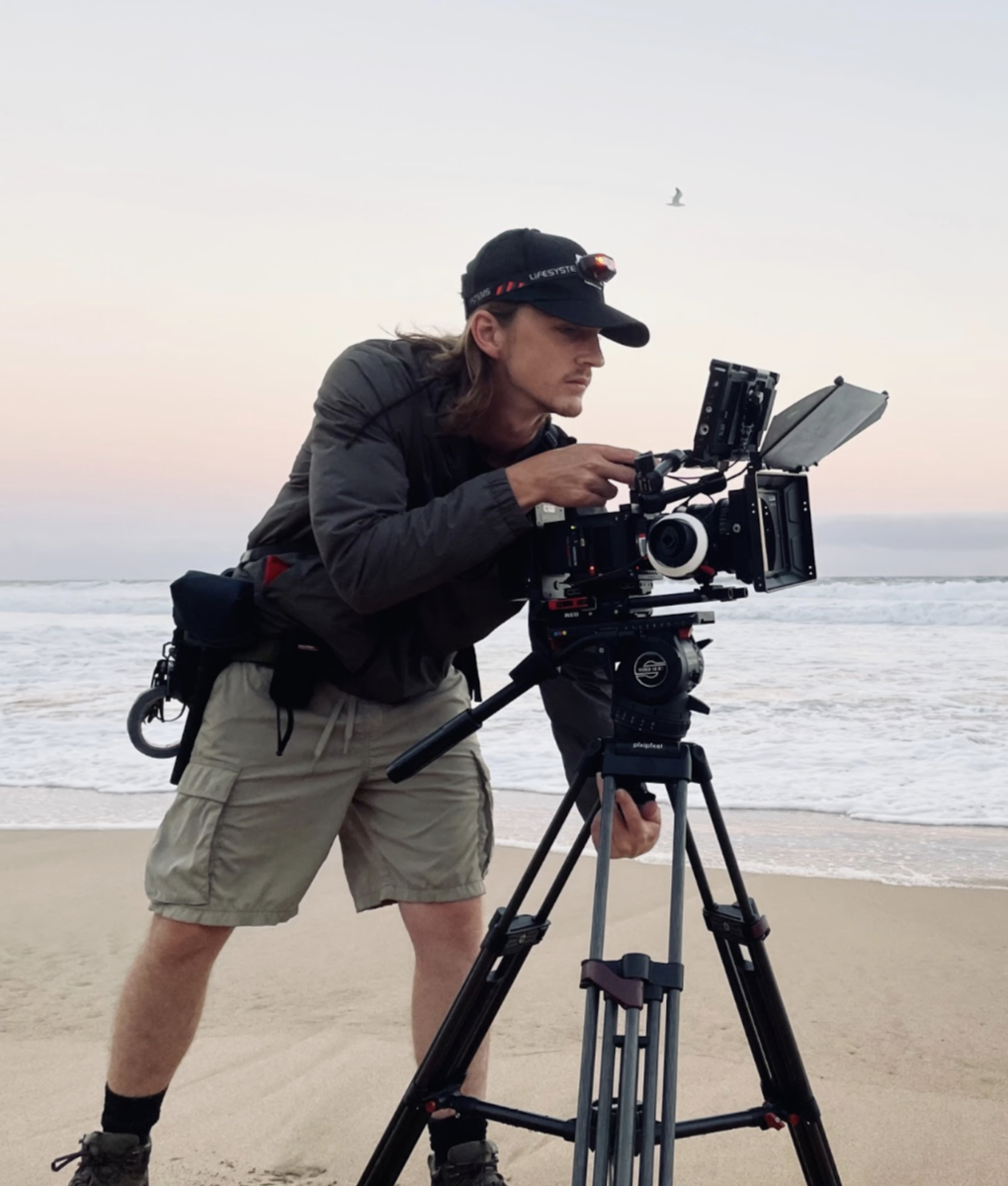
We sat down with NERD’s director Lewis Andrews who brings a refreshing perspective to the evolving landscape of advertising and filmmaking. Lewis has carved out a distinctive space in the industry, embracing both traditional cinematic excellence and the raw authenticity that modern audiences crave. From shooting music videos in Prague to crafting horror shorts in his hometown, his journey offers unique insights into the future of commercial directing.
What are some upcoming projects that you’re excited about? Tell us a bit about them?
While working on Amazon’s TV show Blade Runner 2099 in the Czech Republic, I’ve been simultaneously directing two music videos too. One captures the essence of Prague’s heart, while the other, shot in Barcelona, draws inspiration from the Dune franchise. I’m particularly excited to reveal the Barcelona project soon, which pays homage to Dune’s cinematic universe.
What excites you in the advertising industry right now, as a director? Any trends or changes that open new opportunities?
The most exciting development is the industry’s metamorphosis toward natural, raw, accessible visuals rather than glossy overplayed perfection. We’re in an era where a single tweet or Instagram post can outperform a multi-million-pound campaign. Look at British retailer Currys, who now uses employees for social media content, or Kanye West’s Super Bowl LVIII ad – just a selfie video in a car announcing he didn’t spend money on traditional advertising.
Of course, not every filmmaker can achieve Kanye’s results with a selfie video. But what these big players have demonstrated is that traditional filmmaking isn’t always necessary. The impact of a brand’s advertisement depends on the message, creativity, and authentic resonance with the audience.
What elements of a script sets one apart from the other and what sort of scripts get you excited to shoot them?
I’m drawn to unique concepts, extremely high stakes, time travel, apocalyptic moments, disaster, quick-witted dialogue, comedic timing, and culturally relevant themes. I love when scripts incorporate topical news stories and social issues that challenge viewers’ values and beliefs. There is no perfect film script, because art is supposed to spark debate and divide people’s opinions.
How do you approach creating a treatment for a spot?
My process often starts in complete darkness. The creative process isn’t always linear – I’ll work through multiple ideas until something clicks. It’s not methodical or structured; I let ideas flow and see how they align with each brand’s needs.
If the script is for a brand that you’re not familiar with/ don’t have a big affinity with or a market you’re new to, how important is it for you to do research and understand that strategic and contextual side of the ad? If it’s important to you, how do you do it?
A brand will approach me based on my creative skill and capabilities as a filmmaker rather than my detailed knowledge of their brand history. When it comes to creative direction, you can develop an affinity with anything, even without knowing the full facts. I welcome each project as an opportunity to be unbiased in my creative assessment, basing the direction on my creative instincts first.
For you, what is the most important working relationship for a director to have with another person in making an ad? And why?
A great director has a strong working relationship with all creative professionals involved – Director of Photography, Camera Operator, Art Director, Producer, and Costume Designer. The team can make or break a project, which is why I maintain a black book of industry-level talent.
What type of work are you most passionate about – is there a particular genre or subject matter or style you are most drawn to?
I am quite drawn to horror, and all things which seem a little bit off. I love reimagining. I love reimagining characters, emulating real-life encounters, and incorporating my dreams into my film work.
What’s the craziest problem you’ve come across in the course of a production – and how did you solve it?
I once had less than 24 hours to coordinate a shoot in Morocco. We managed by connecting with a local film student who had filming permissions, enabling us to shoot in Marrakesh, the Agafay Desert, and city center.
How do you strike the balance between being open/collaborative with the agency and brand client while also protecting the idea?
Clear communication and thorough pre-production breakdown are essential. This preparation helps prevent later confusion. I keep in mind that creative briefs are just ideas, and ideas for someone else’s project can never truly be yours, because that wouldn’t be a collaboration.
What’s your relationship with new technology and, if at all, how do you incorporate future-facing tech into your work (e.g. virtual production, interactive storytelling, AI/data-driven visuals etc)?
AI is a genie out of the bottle for quickly projecting ideas in pre-production stages. Mid Journey is a super tool that can produce fluid imagery from text. In the past, I would solely use photoshop to enhance treatment imagery but now I can create rough concept art quickly with Mid Journey then I process it to finalise.
Which pieces of your work do you feel show what you do best – and why? Include 3-4 links and a sentence or 2 about each piece of work!
I would love to share the new works here but they are not quite ready yet! To give a flavour …
DRINK was a project where I could control every creative aspect. From the set design (creating a cobwebbed dark bedroom out of my outdoor cupboard space), selecting and designing the costumes, sourcing an E-Type Jaguar, creating and executing the whole film storyboard, embedding cool visual effects. DRINK was a project I was fully immersed in.
Clown was a short film which represents the imperfection I was talking about earlier in the article. It’s a small project I created with my friends in the town where I grew up. We shot it in the early hours of the morning so that I could transform the town into an eerie film set. I wanted the piece to feel as morbid and haunting as possible whilst retaining the audience until the end.
From navigating last-minute shoots in Morocco to transforming outdoor cupboards into cinematic sets, Lewis Andrews exemplifies the modern commercial director’s need to balance technical precision with authentic storytelling. His approach – embracing both high-end production values and raw, unfiltered creativity – positions him at the intersection of traditional filmmaking and contemporary digital culture. Andrews isn’t just adapting to the changing landscape of commercial directing; he’s helping to shape its future.