
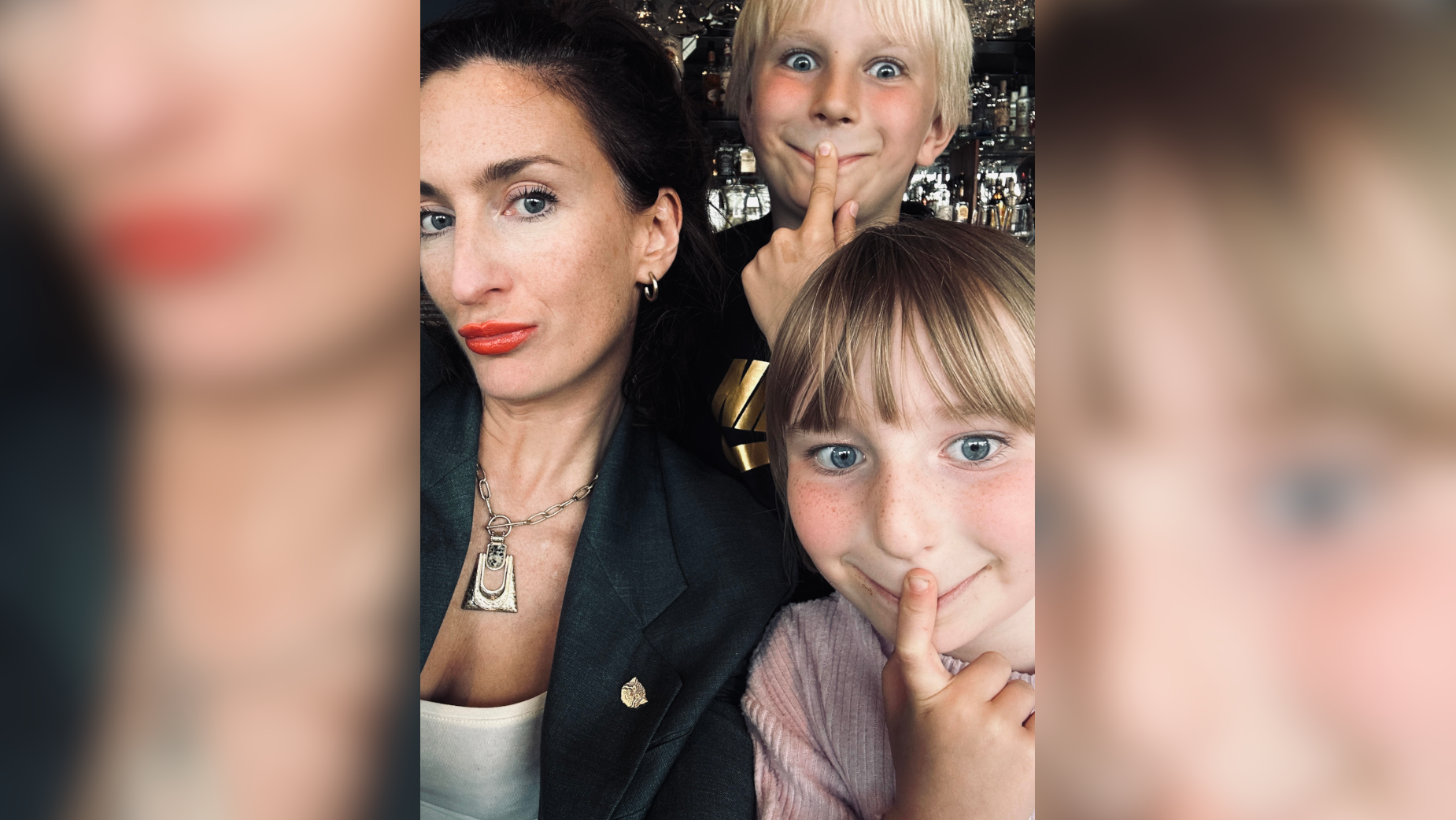
Senior producer Kate Hinton explores the magic of the production village and why rigid return-to-office mandates risk pushing diverse talent out of adland.
Motherhood in advertising has long been an unspoken challenge – a career-defining crossroads where ambition is too often questioned, and support systems fall short. And while the industry has made progress in acknowledging the realities of working parents, tangible change is still slow, leaving many mothers to navigate the journey alone.
In this instalment of Motherland in Adland – the series founded by NERD’s Milana Karaica in partnership with LBB – we hear from Kate Hinton, senior producer, performer and writer.
She reflects on her journey from a working-class single-parent household in North Yorkshire to navigating the precarious logistics of single motherhood in adland. Here, she explores the beautiful magic of the production “village” and warns how rigid return-to-office mandates risk pushing out the very diverse, adaptable talent the industry needs to thrive.
—
There is something incredibly beautiful about initiation. About the birth of an idea. And also the birth of a real live human… creative magic at its best.
Whether it’s a film, a campaign, a documentary, a photograph, a piece of theatre, or raising a child, there is always this invisible human current running underneath it all. Time. Love. Logistics. Money worries. Pressure. Creative tension. Endurance. People trying to align emotionally and practically to create something impactful, authentic and original.
That, to me, is the beauty of the creative industries, and the layers and evolution of motherhood.
From the first spark of an idea to the final viewing experience, there are hundreds of human interactions pulsating all the way through it. Camera teams. Producers. Post production. Runners. Editors. Sound designers. Colourists. Costume. Hair & make up. Clients. Directors. Writers. Assistants. Photographers — the ever-important list of people goes on. All from completely different walks of life somehow trying to move towards one collective goal.
And some of the most magical productions I’ve ever worked on have been built by people from entirely different backgrounds, identities, sexualities, ages and perspectives somehow finding rhythm together. That is the magic of creative collaboration at its best. Not tokenism. Not corporate box-ticking. But people genuinely being seen, respected and valued for both their humanity and their talent.
Sometimes I think if society echoed the same understanding, adaptability and collaborative spirit that happens within the production process and on great shoots, we would genuinely be in a far better place.
I was raised in a working-class single-parent household in a village in North Yorkshire, and by gum, that village carried me. Neighbours. Humour. Community. Resilience. People stepping in when needed. It truly does take a village.
Which is why I find it kind of ironic that we create huge amounts of content designed largely to be consumed alone through our glowing screens, despite the immense amount of human collaboration, emotional intelligence and collective endeavour it takes to make it all happen in the first place. I say — long live the cinema, and the shared experience of audiences coming together to feel the beauty of all that work on the big screen.
As someone who has worked across production for many years, from interviewing at London Fashion Week and working on groundbreaking science programmes at the BBC, to producing music videos, fashion films, huge TVCs, documentaries in the wilds, social content and integrated campaigns, whilst also acting, writing, creating and now pitching my own dark surreal comedy series, I still graft hard between the constant logistics of single motherhood.
And I still genuinely love this industry.
I love the people. I love the stories. I love the madness of trying to pull something brilliant together under pressure and then seeing the connection and impact when it’s finally out there. I have a real thirst to stay curious, collaborative and connected, now with a slightly more motherly edge at heart.
But I also think many of our systems are no longer reflecting the realities of modern life.
Production itself constantly adapts. Weather changes. Budgets shift. Talent drops out. Creative changes happen overnight. Entire teams pivot continuously to make things work. Yet ironically, many workplaces now operate with increasingly rigid expectations around returning to the office across the board, despite the fact we proved during lockdown that flexibility and trust were entirely possible.
Like many people, I moved to the Kent coast during lockdown. Partly for affordability, partly for my children’s lives, but also because I wanted nature on our doorstep. I work incredibly hard, but I also don’t believe human beings are designed to exist entirely through screens, schedules and work titles.
We are multifaceted.
We need sea air. Grass under our feet. Space to think. Space to breathe, when possible. Especially in industries where so much of our lives are spent attached to machines.
If anything, I think the industry has to become more honest about the fact that people can deeply love their work without wanting their entire identity consumed by it.
Since lockdown, the pendulum has swung heavily back to three-days-a-week office culture. While I absolutely understand the importance of collaboration and physical connection at times, the reality is that blanket rules simply do not fit everybody equally.
For single parents especially, the financial and logistical pressures can become immense. Commuting costs are extraordinary, childcare remains incredibly expensive, and Brexit significantly impacted access to affordable long-term au pair support for many families. Freelancing, whilst creatively liberating in many ways, comes without any real parental safety net whatsoever.
I remained freelance for years partly because it allowed me to continue working remotely whilst remaining geographically close to my children. I’m deeply thankful for the opportunities and brilliant teams I’ve worked with during that time. But there’s no denying freelancing can also be precarious, inconsistent and emotionally exhausting.
I also have huge respect for the continual work Anna Whitehouse, AKA Mother Pukka, has done for making significant noise and impact around flexible working and modern parenthood. These conversations matter deeply because they are not simply about convenience, they’re about humanity, access and allowing people to participate fully in both work and life. As with productions, we need to evolve and adjust where needed in real life too.
When you look at countries like Sweden, Denmark and Norway, there is clear evidence that more flexible, trust-based approaches to work and family life can lead to healthier, happier and more productive societies. Strong parental support and healthier work-life balance are proven investments in people and long-term wellbeing.
I think the UK has a real opportunity to evolve here. To modernise not just technologically, but emotionally and socially too. It’s okay for systems to change when we can clearly see healthier, more supportive ways of living and working being successfully implemented in other countries.
And what concerns me now is not simply flexibility for parents. It’s the wider risk of who quietly gets pushed out of our industries when systems become too rigid. Working-class talent. Regional creatives. Single parents. Neurodivergent creatives. Graduates trying to gain footholds. Older creatives with enormous value and experience.
We cannot champion diversity within creative output whilst structurally narrowing who can realistically remain within the industry itself.
Because salaries are increasingly competitive. London is extraordinarily expensive. Arts funding and creative subjects continue to be stripped back in schools. And if we’re not careful, we risk drifting backwards towards industries that feel accessible only to the financially privileged.
The arts aren’t a ‘nice to have’. The UK creative industries contributed an estimated £145.8 billion to the economy in 2024 and supported around 2.4 million jobs across advertising, film and television, music, gaming, design and the wider arts sector. Which is why it feels such a stark contradiction that creative subjects and arts funding continue to be stripped back within education at the very moment we should be nurturing imagination, emotional expression and future creative talent more than ever.
At a time when AI and digital consumption are accelerating rapidly, creativity and storytelling are not simply entertainment, they are part of what keeps us human. The arts improve emotional wellbeing, empathy, confidence, communication and social connection. They bring people together across generations and communities, helping people feel seen, understood and less alone.
If we stop properly investing in creativity, community and human expression, particularly for younger generations, we risk losing far more than industries or jobs. We risk losing part of the emotional and cultural fabric that connects us to one another in the first place.
Motherhood itself has actually deepened my creative perspective enormously. It sharpens your emotional intelligence, resilience, adaptability and understanding of human behaviour. It forces you to become more efficient, instinctive and empathetic all at once. Those are not weaknesses within production and storytelling. They are strengths.
As somebody who has mentored younger people throughout my career, I feel hugely passionate about protecting pathways into this industry for the next generation. One of the driving forces behind a series I’ve developed is building paid apprenticeship opportunities into the production itself for young working-class crew who may otherwise never gain access to these spaces.
And at the core of it all, our industry needs to remember that human beings are not one-size-fits-all. The more flexibility, trust and understanding we allow within working life, the more people are actually able to thrive creatively.
Life ain’t linear. We all face adversity in life and work at different stages along the way, but if there’s one thing the production world teaches you, it’s that people work best when there’s kindness, communication, flexibility and support. We adapt. We problem-solve. We pull together. And perhaps there’s something in that collaborative spirit that wider life could learn from too.