
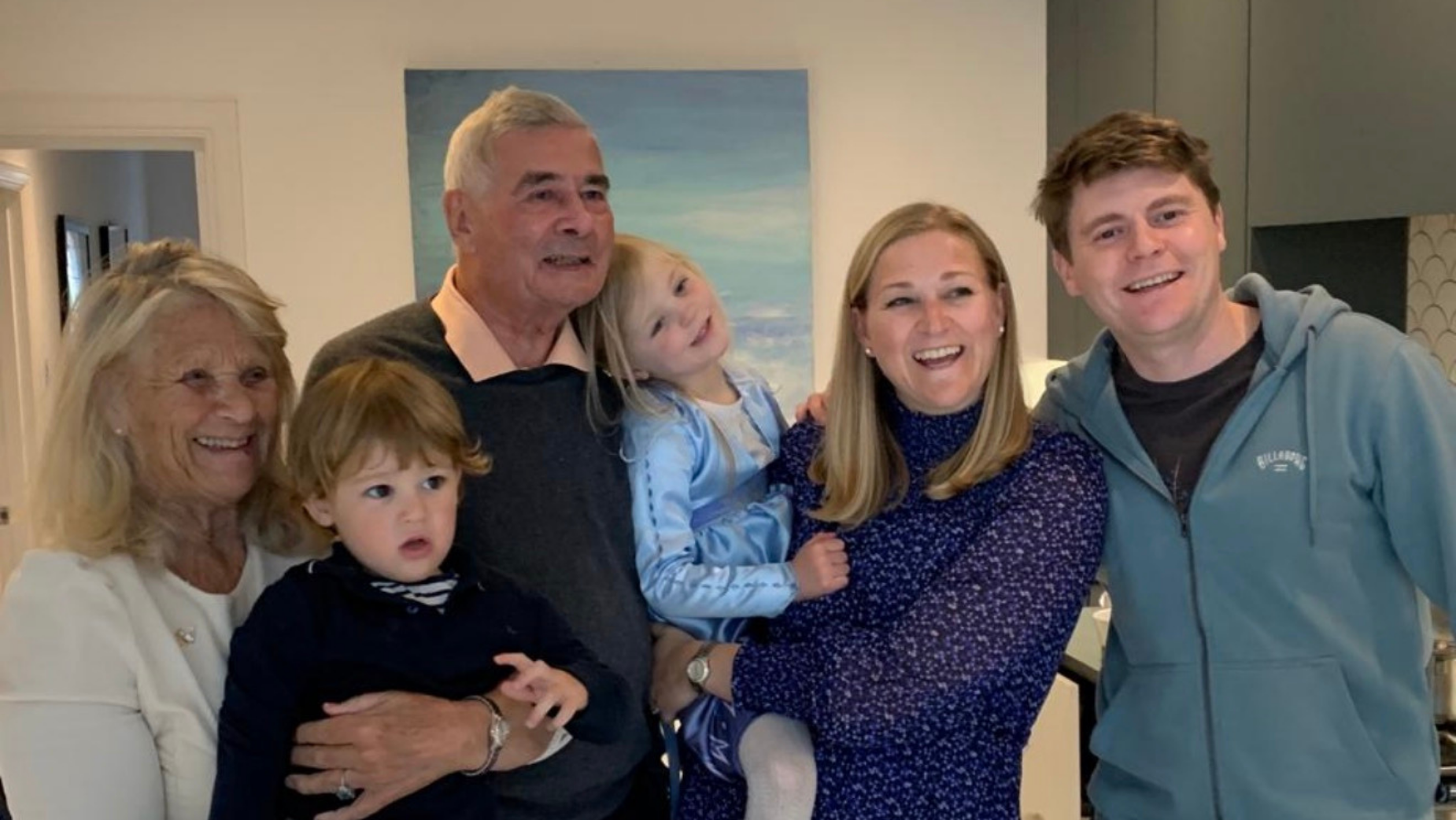
Caroline Ayling, marketing director at JAA Media, offers a personal perspective on why flexibility can determine whether mothers stay in the industry.
Motherhood in advertising has a way of turning everyday life into an exercise in logistics. The job itself may be demanding, but for many working mothers it is only one of a dozen things competing for attention at any given moment – from childcare and school runs to household admin, caring responsibilities and the question of who gets called when something goes wrong.
In this instalment of Motherhood in Adland, Caroline Ayling, marketing director at JAA Media, reflects on a working life shaped by freelancing, reduced hours, flexible working and the realities of raising two children, including navigating a SEND diagnosis for her youngest son.
From discovering that parenthood can make you ruthlessly efficient at work to confronting the financial and emotional cost of keeping every plate spinning, Caroline makes the case for a more flexible system – and asks why, even in supportive workplaces and supposedly equal households, so many of those plates still seem to belong to mum.
–
“How Do We Get Him Out of the Tree?”
It is 10:45 on a Thursday morning and my phone rings on silent – the school name flashes across my screen – for the third time this week. I’m on a Teams call with two other agencies talking about an event we are collaborating on to improve our clients’ creativity and effectiveness.
Do I excuse myself? What if my child is in grave danger or has been rushed to hospital? Or do I ignore it? (Yesterday’s call was to ask if I could “stop allowing my son to come to school with a picture of his favourite pink train?”)
The mother in me cannot just watch it ringing and makes my polite excuses for a brief switch to ‘camera off and mute’. The teacher on the end of the phone seems to be trying to wrestle my autistic son out of a tree and is asking if I have any techniques that work at home. Well, lovely lady yes I do but they will not pass your safeguarding protocols so I suggest she waits it out, and then doesn’t let him near the tree again. I then make a mental note to speak to the family liaison officer tomorrow as I cannot be called every day whilst at work for non-emergencies – they are experts in this field (he is at a specialist school). I have a job to do – and he does have a father as well. Why is it always my phone that rings?!
If this situation resonates, read on… if not, maybe hit up section six where I outline a few thoughts for society and government to consider.
This column allows working mums in adland the chance to tell their story. Mine is unique and, like pregnancy and childbirth, we all manage motherhood in different ways. This way worked for me, to some extent, and has allowed me to see where the system is failing. This is one story, take what you need from it, challenge what you want to, if it helps one person, woman or man, just one percent then job done for me.
Fertility and a Leap of Faith Leading to Freelance Flexibility
I was at a career crossroads when I got married and wanted to start a family. I was managing director of a boutique sports-cum-travel agency. It was a lifestyle business for the board but it wasn’t my lifestyle so it was time for a change.
I had been diagnosed with POCS, now polyendocrine metabolic ovarian syndrome (PMOS), in my late teens so I had thought I would always struggle to have children. After we tied the knot and returned from our idyllic honeymoon both my husband and I embraced career changes.
Instead of finding a new full-time job I decided to go freelance and give my mind and body some space to see if reducing work stress could free up my quirky ovaries. I got pregnant instantly. We will never know if that was my more stress-free environment or my funny ovaries were actually quite hardworking and my uterus quite hospitable.
I have never been so totally and utterly shattered than that first trimester. Thank god I was only working three to four days a week. I slept every moment I wasn’t at a desk or on my commute into Moorgate. The female body is remarkable, but I have no idea why we have to hide what our bodies are going through in those first 12 weeks of creating human life.
(Full disclosure here – I have not suffered baby loss, but I am not the norm, far more the exception. It may surprise some readers that one in five pregnancies results in miscarriage, although I suspect if you’ve got this far, you already know that. There are some amazing women in our world doing a huge amount to support and educate the industry and I would highly recommend following Jennifer Elworthy if this topic is close to your heart.)
My takeaway: More flexibility on when maternity leave is taken across the pregnancy and maternity cycle. Right now you can take leave from 11 weeks before your due date, based on the assumption that pregnancy itself is a fully-functioning nine months and the hard part starts once the baby bump is big and when the little one arrives.
For those of us who physically struggle with pregnancy – and there are more of us than you’d think – that assumption doesn’t hold. Being able to draw down some of that leave, or move to reduced hours, in a brutal first trimester could dramatically improve both the pregnancy and the return to work that follows it. The system asks women to just push through what can be the worst of it on full hours, then hands them the flexibility later when it might be too late.
The Freelance Advantage
My early motherhood journey was very much set out “on my terms”. Pregnancy and I didn’t really agree, so working three-day weeks was what felt right for me. As it turned out, newborn motherhood and I didn’t really agree.
I completely lost my identity, as many women do. I was no ‘earth mother’. Don’t get me wrong I loved my little froglet but after four months a former colleague asked if I could help out on a pitch. I was ready to re-engage my tired brain beyond bottle sterilisation and going to Hartbeeps as a morning activity.
Well, we won the pitch and I was offered a part-time contract to fulfil the work. Perfect! I did a few consultancy projects on the side as well, all on my terms. The joy with freelancing is I was being paid to do a good job, my reputation depended on it, but I didn’t have to manage any of the office politics.
During my five years freelancing, seeing through two pregnancies and births, I was able to experience life in-house (Accenture and Diageo), network agency side (WPP) and as a solo consultant. I learned a huge amount about myself. I am not a big-network person, I am not a lone-wolf worker. My freelance period allowed me to be a present and loving parent, and I believe saved me from some dark depressive days in early motherhood plus it set me up for my next chapter.
My takeaway: Not all women want to take a full/structured maternity leave. I know not everyone has the luxury of choosing freelance, I did it in a time where I could find roles through my network but for me freelance meant I wasn’t held to timelines of when to return to the office. For many women their identity is woven into their day job and to just lose it all for 9-12 months seems such a black and white approach when there is room for grey and a more nuanced return for parents.
The Efficiency Paradox
I have yet to meet a more efficient person in the work environment than a new mother. A returning parent may need a little flexibility in their hours but trust me there is no bigger reason to get the job done well in order to get back home for bath time. I specifically don’t single out mums here as I believe this to be true of all returning parents whether mother or father.
This is not to say returning parents withdraw from company culture but reduction in water cooler chat, no meeting creep, hyper-focus on the task at hand are all attributes of a returning parent.
Historically we are an industry that measures presence as commitment, I’m very fortunate that at JAA hybrid working is actively encouraged and we have no fixed ‘office days’. We are trusted to get on and do a great job – where that takes place is up to the individual.
My takeaway: Flexibility leads to greater efficiency especially with working parents. I actually think the pandemic gave working parents a leap forward on this one, a small grace from a horrifying time.
What Workplace Stress?
Aligned to the efficiency I mention above, my perception and understanding of stress completely changed after becoming a parent. Prior to motherhood it is fair to say I was defined by my job and career. I gave it everything. I would be consumed by work to the point where any kind of challenge or failure led to personal breakdown. I pity the poor male manager that had me in tears before I rushed out of the meeting room to vomit because I couldn’t seemingly find a solution for a client. I mean, looking back on it now, I needed to get a grip but actually I was burnt out and broken.
When you have kids, it completely resets priorities and understanding of stress, particularly work-place stress. When you are responsible for a small human’s existence and survival, a challenge at work seems more fun than stressful – well, it did for me anyway.
I would add here that this is where the real plate spinning kicks in. The stresses of being a ‘working mum’ are intense: childcare, drop-off and collection logistics, holiday planning (here I mean both managing time when kids are off school as well as actually organising family trips away), keeping a home going, the weekly shop, booking extracurricular activities, managing appointments (dental, medical, SEN – more to come on that) etc. Alarmingly this is the domain of mum, there are many male allies out there but not enough yet. I would recommend anyone interested in finding out more to follow Elliott Rae, founder of Parenting Out Loud and Lee Chambers, CEO of Male Allies UK.
My takeaway: Becoming a parent recalibrates work-place stress. The stress doesn’t disappear but for me, I’d finally met something bigger. It’s telling though that the plates most working mums are spinning are still, overwhelmingly, theirs to catch.
My Personal Pivot: SEND* Diagnosis
*Special Educational Needs and Disabilities
Shortly after our son’s second birthday my husband and I became acutely aware our youngest was not tracking typically. Milestones were missed and if I’d been given a strawberry for every time a friend said “Gosh, he’s full on isn’t he!” that summer my punnet would be overflowing. I was working three days a week – in the family business as marketing director of JAA, getting my teeth stuck into our proposition, new business and company growth. Work was great but at home, we knew something was up. Through the joys of the NHS system, it took us three years to get an autism diagnosis.
Luckily for our son, I’m a whizz with paperwork (this is where new biz RFIs turn into a transferable skill!) and I had two days a week to dedicate to fighting for his EHCP. It arrived just in time for him to start school in a specialist environment. A place that taught him to speak and provided six teaching personnel for a class of eight. Let me tell you these women (and they have all been women bar one) are the modern-day saints who deserve so much more than what they currently earn.
Many parents still feel a stigma around a neurodiversity diagnosis for their child. We leaned into our son’s difference and his autism but it is bloody hard. Harder than anything else I have ever faced, but it has made me a better person for sure. More understanding, more patient, more forgiving. For me it’s also been a type of grief and we are living a life we never thought we would. I was talking to a senior leader in the industry and we discovered we both had children with differences. We spoke about it as a club, once you know you are in the club, there is no judgement, just understanding and respect.
At this point I want to highlight a few key, alarming stats about parents of SEND children:
- 62% of parents have given up work or reduced their hours in caring for their disabled child, resulting in an average £21,174 loss in family income. (Source: Counting the Costs 2024);
- It costs on average three times more to raise a disabled child than a non-disabled child. (Source: Contact – Finance and Benefits 2026);
- Only 16% of mothers of disabled children are in paid employment, compared with 61% of non-disabled children. (Source: DWP and Caring Among Families with Children);
- Parents who leave work or reduce their earning potential through caring for a disabled child could retire with up to £138,000 less in their pension. (Source: People’s Partnership – The Parent Pension Gap 2024);
- Thirty three to 40% divorce/relationship breakdown rate of parent carers since a child’s disability diagnosis. (Source: Contact and Disabled Children’s Partnership).
Being a working parent is already hard enough, these stats alone show the dramatic disadvantages and pressures SEND parents and in particular mothers are put under.
Late last year we had a situation where even on four days a week I needed more support so my husband changed his hours, only ever so slightly, but enough to ease a point of stress for our family (the morning juggle of getting two kids to two different schools). We also have a nanny, a specialist who is trained in managing SEND children. Yes that is costly, but it is also a necessity as after school clubs are not an option for us. In order for me to work, which is my sanity driver, it has to be on a flexible basis and with paid support.
My takeaway: SEND parents are superhuman – they need protections and support in and out of the workplace.
The Big 3
If I could speak to government today here are my big three things:
- Parental leave reform
- More flexibility on maternity leave period starting at the first trimester
- Shared parental leave as default, not opt-in, because equity at home and work starts with policy, not sentiment.
- Childcare
- Costs need sorting out. Quite often it is not a financially viable option for a parent to return to work, especially if you have more than one child under five
- Annual leave / school-term mismatch – there needs to be a better solution. I understand the summer holidays is a throw back to the ‘Season’ – Parliament is even on holiday! Maybe we should work out a solution for the modern family which no longer has a homemaker in the kitchen dawn til dusk.
- SEND reform
- More support for parents, especially single parents, for managing SEND children. A realistic understanding of the financial, professional and emotional costs of having a SEND child
- Educational reform that provides teachers, local authority decision makers and schools with better and more inclusive practices.
And Finally… Plate-Spinning Specialists Make Adland Superstars
Two years ago I started seeing a therapist – I recognise this as a strength rather than weakness – and described my plate spinning as my coping mechanism. The more complicated life was getting, the more plates I put in the air. The perfectionist in me wouldn’t let any fall so I was spinning at breakneck speed. Here’s my list of plates that were whirring then; the strike-throughs are the ones I realised needed to come down:
- Day job at four days a week as marketing director of JAA;
- Primary manager of household (shopping, cleaner etc);
- Primary manager of two school aged children (WhatsApp, extracurriculars, school primary contact etc) ;
- Primary lead on all SEN needs (paperwork, annual reviews, local authority liaison);
- Employer (of our specialist nanny);
Trustee of charity (Duchenne UK);Workplace voluntary roles: President of Bloom / Chair AMI CAT Group;Netball coach (unpaid) to three adult squads.
Some new things have joined the list too:
- Support to aging parents – I am part of a growing cohort in the sandwich generation of caring top and bottom of the family tree;
- Self-care through gym work – good for mind, body and soul;
We are also trying to actively share the load at home more. We have agreed with the school that they can no longer call me to get our son out of a tree – emergencies only from now on and every now and again, just call my husband first.
I have a supportive and loving partner and I am fortunate that I work for an organisation that encourages hybridity and rewards outcomes not outputs, deliverables not presenteeism. However, I have not returned to working and earning a five-day-a-week salary since I started freelancing in 2016. That is a decade of managing my working-mum load, my way.
This article was originally entitled ‘A Plate Spinners Guide to Adland Motherhood’. Perhaps it should just be ‘Motherhood’ as adland can’t be held responsible for all the plate spinning us mums do! But I do think adland creates a remarkable type of woman and mother. Someone who is resilient, quietly confident, caring, challenging and an inspiration for the future generations of adland mothers to come.